
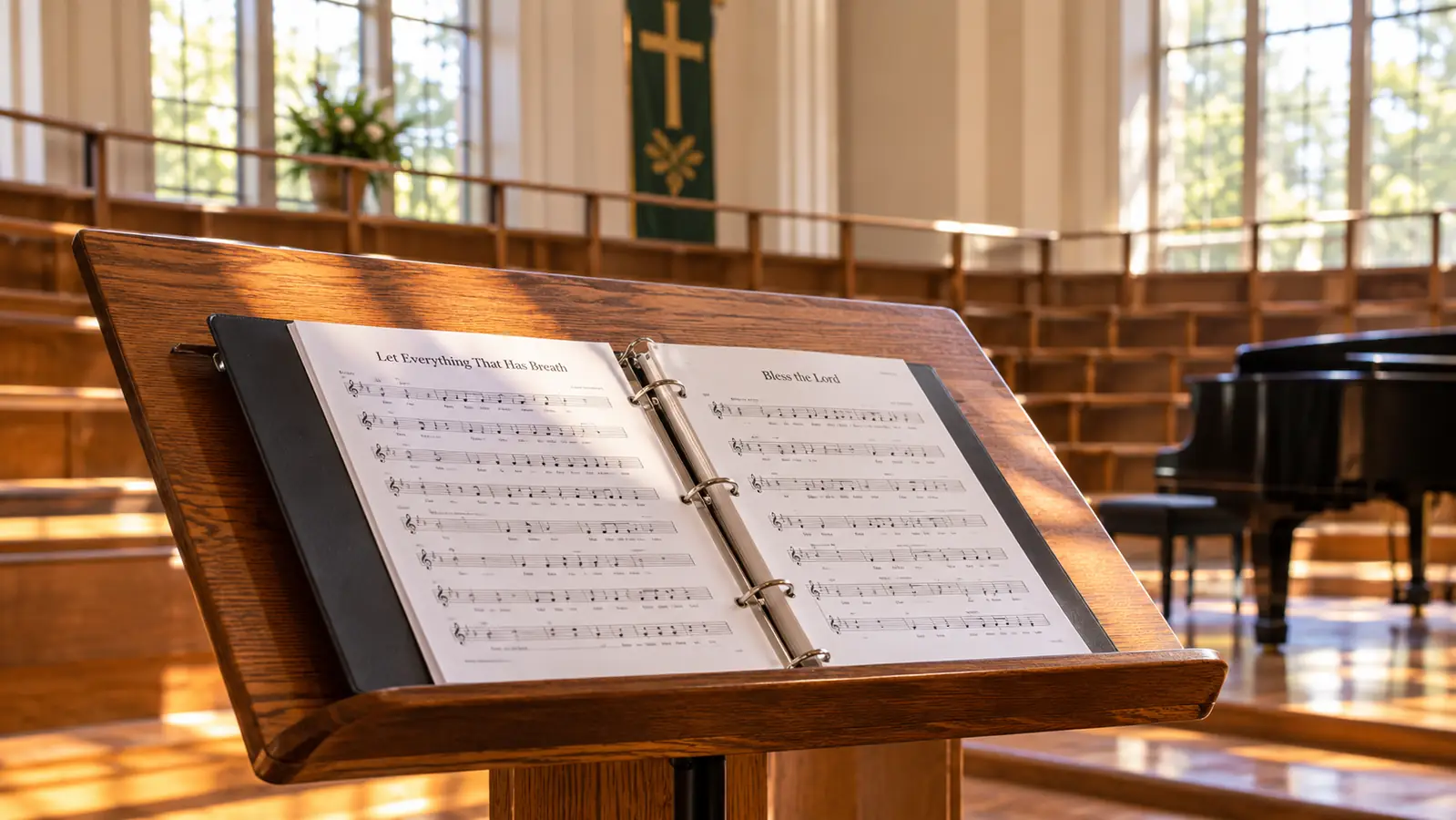
Every choir has one. Sunday morning, ten minutes before the processional, someone walks into the loft holding a fistful of loose anthem pages, a bulletin, and a pencil, and spends the opening prayer trying to shuffle them into some kind of order. I have been that someone. I have also been the alto standing next to her, watching a page of the descant slide slowly under the tenor riser.
After more than thirty years in the alto section at Greater Mount Zion, and a long stretch of keeping the robe closet and the music shelves in the fellowship hall, I have stopped treating this as a personality problem. It is a setup problem. A three ring choral folder with real capacity fixes most of it before rehearsal ever starts. The folder I hand out now is the YOTINO sheet music folder, a 13 by 10.2 inch PU leather binder with rings that open and two pockets inside, and it has outlasted the vinyl folders we used for years. Here is how I set one up, in the order I actually do it.
The folder that survives a Christmas program
The YOTINO choir folder holds up to 220 sheets on three rings, opens to 120 degrees for rehearsal and flat at 180 for marking, and has two inside pockets for the pencil and the anthem that has not been hole punched yet.
Amazon Check Today's Price on Amazon →Step 1: Empty the whole stack onto a table
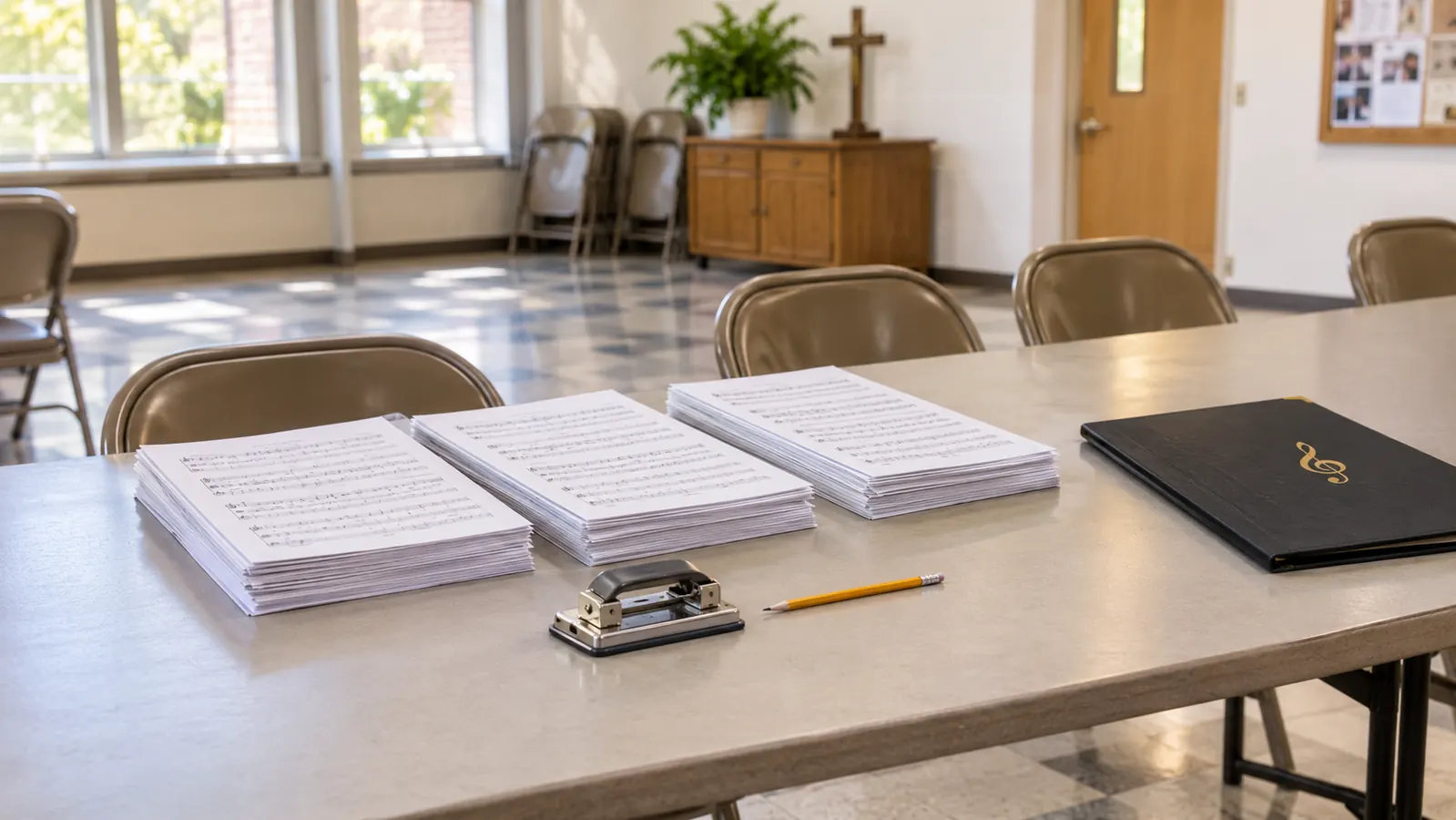
You cannot organize a folder while the folder is your work surface. Start at the fellowship hall table with everything out of the bag: the anthems, the photocopies, the descant sheet, the handwritten alto line a friend wrote out for you, the bulletin inserts, and the church directory page you meant to hand back in March. The first Saturday I did this properly was in early September, with the fall season starting the next morning. I emptied my bag onto that table and counted: eleven anthems, two descant inserts, a photocopied alto line, and about forty loose pages that had never been punched. The pile sat four inches deep. I had been carrying most of it since spring.
Sort into three piles. First pile, music we are singing this season. Second pile, music we may sing again and should keep. Third pile, everything else, which goes into the choir library box and not into your folder. Be honest about that third pile. Half of what a singer carries around is a piece the choir retired two years ago and nobody had the heart to say so.
Then punch the keepers. This is the step people skip and it is the step that matters most. If you punch before you file, everything after this is easy. If you punch after, you will be doing it on a music stand with a borrowed punch while the director is already giving the pitch. I tried a cheap single hole punch first, the little one from the church office drawer, and it cost me an afternoon. The holes landed a quarter inch off from the rings on half the pages, so the music hung crooked and caught on every flip. A three hole punch with an adjustable guide, the kind that clamps the paper against a stop, puts every sheet in the same place the first time.
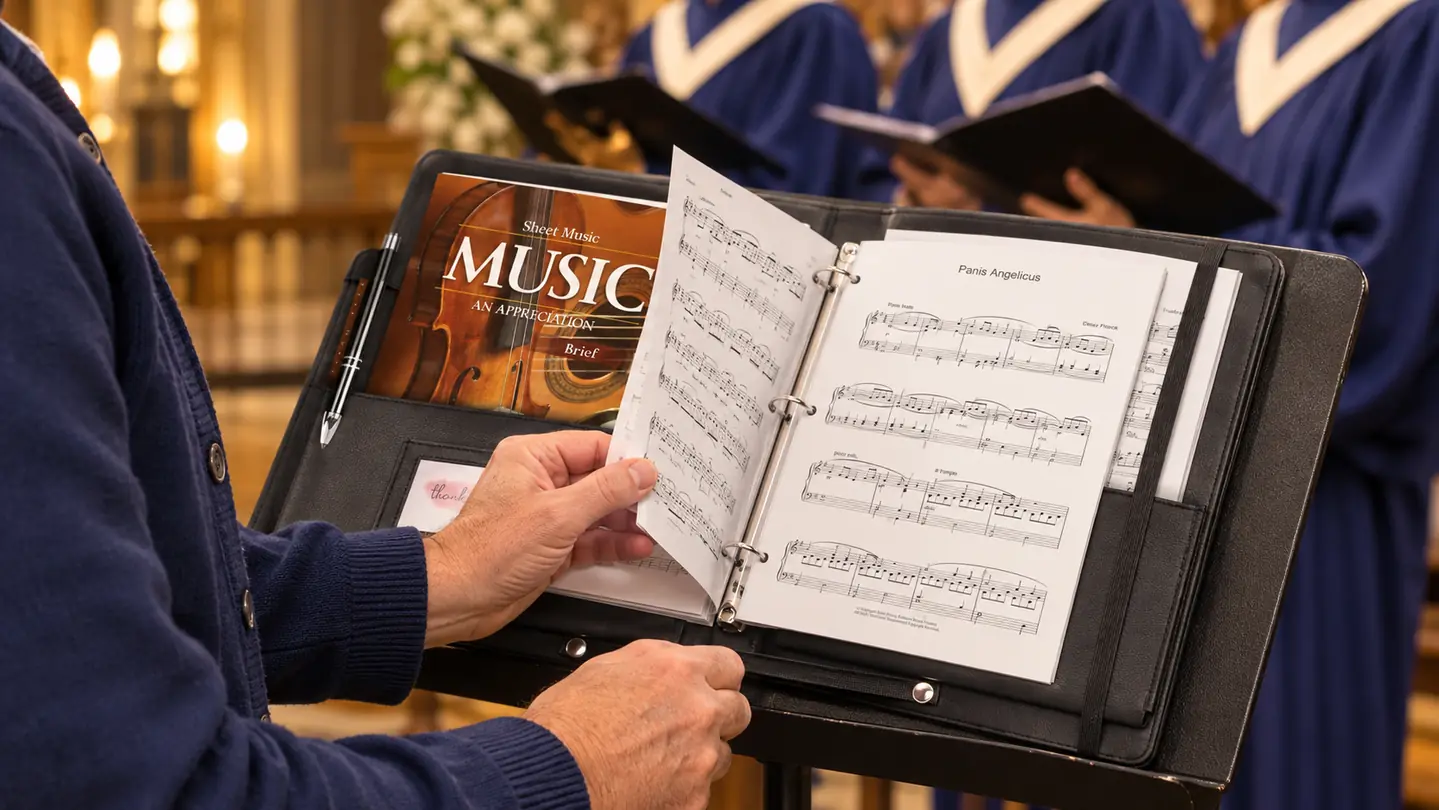
Step 2: Build the book in the order you will sing it
Music goes in service order, not alphabetical order and not the order it came out of the packet. Prelude, processional, anthem, offertory, second anthem, benediction, recessional. I know it feels fussy on a Thursday night. It stops feeling fussy the first Sunday you need the second anthem and the piano has already started.
Sunday morning does not give you time to search. You are standing in a loft with thirty other voices, the lights are warm, and everybody is waiting. One Sunday last October I watched a soprano miss the first eight bars of the offertory because her anthem had been filed behind the wrong divider. The piano had already started. She found it on the third flip, and by then the altos had carried the melody alone. That is what alphabetical order costs you.
Capacity matters here more than people expect. The YOTINO folder is rated for 220 sheets, and an ordinary Sunday uses a fraction of that. Then the Christmas program lands, and you are carrying four anthems, a descant, a photocopied brass part, and a handbell chart. Last December our Christmas Eve music ran to nine separate pieces in one service. That is the week a thin vinyl folder bows at the spine and starts dropping pages on the risers.
Step 3: Solve the page turns before the first rehearsal
This is the part nobody teaches, and it is the whole reason to use rings instead of loose sheets. Open the piece on a stand or a table and find the one spot in the middle where a turn does not cost you a note. Mark it in pencil. Pencil, not pen, because the director will change something in week three and you will want to move it.
The ring style helps more than you would think. The rings on the YOTINO folder open to 120 degrees for rehearsal, so the folder stands upright on a stand or in your lap without folding shut on you, and they open flat at 180 degrees when you want the piece lying open on a piano or a table for marking. I set a new folder up flat on the fellowship hall table, do all my marking sitting down, and then close it. Standing at a music stand with a folder in one hand is how pencil marks end up in the margin of the wrong page.
Two more marking habits from thirty years of this. Copy the repeats and the D.C. al fine in pencil at the top of the first page, because the person who already knows the piece is not always the person holding the folder that week. And write your voice part in the top corner. When a folder turns up on the lost table on a Monday, that little note is how it finds its way home. I have returned four folders that way in the last two years, and every one of them had a name and a part written on it.
Step 4: Use the pockets for everything that is not on the rings
Every choir folder carries more than music. A pencil. A sticky note pad. A cough drop for the soprano behind you. The anthem that came in this week and has not been punched yet. The two inside pockets on the YOTINO folder hold all of that without turning the folder into a suitcase, and the fixed strap inside keeps the pages from shifting when you set it down on a chair.
Keep the pencil in the pocket and not clipped to the rings. A pencil riding in the rings will tear a hole on the first flip, and I have replaced more pages over a pencil than over anything else in thirty years. The same goes for a metal clip or a bookmark with a hard edge.
One rule about the pockets: nothing in them should have to come out during the service. Pencils and sticky notes are fine. The family photo, the grocery list, and the newsletter are not, because the moment you start slipping something back into that pocket you have stopped singing, and the alto line does not sing itself. I learned that from a soprano who kept a grocery list in her folder for an entire Lenten season and never once noticed it was there.
Step 5: Label it and give it a home
You will lose a folder. Everyone does, eventually. What saves you is a name and a system. Write your name inside the front cover in marker, and write it on the tab at the top edge as well, because the top tab is what you see when the folder is standing upright on a shelf and you are looking for yours in a hurry.
At church, our music shelf is organized by voice part, and every folder sits in the same spot every week. Putting them back takes about four minutes on a Sunday afternoon and it saves ten minutes of searching on a Wednesday night. With thirty voices in the Sanctuary Choir, that is thirty folders on one shelf. If your choir does not have a shelf system, start one. A strip of masking tape and a marker is enough, and a label maker is even better if the church office has one.
At home, pick one place and keep it there between Sundays. Mine lives on top of the piano bench next to the metronome. Every Saturday that I set it down somewhere else, I find it on Sunday morning in the car. Walter has learned not to move it, which took a few years and one very quiet drive to church.
What Else Helps
Three things do more for a choir's music organization than any single folder. A hole punch that lives in the fellowship hall and never walks off. A music stand at home, so you can mark page turns sitting down instead of balancing a folder on your knee at the kitchen counter. And a library box for retired music, labeled and dated, so the shelf does not slowly fill up with pieces nobody sings anymore.
Seasonal music is its own small problem. Christmas and Easter books carry more pages than a regular Sunday, they get used hard for six weeks, and then they sit. I keep a second YOTINO folder just for the Christmas program, loaded once in November and shelved whole in January. Next November it comes out ready to go, and I am not rebuilding it while the rest of the section is already rehearsing.
And keep a damp cloth in the closet. Florida humidity is unkind to anything paperboard, and the covers on our old folders went soft and spotted after a few summers. The PU leather on the YOTINO wipes clean in about ten seconds, which matters when a folder has been sitting in a hot choir room since May. I do a quick pass over all thirty covers in August, before the fall season starts, and it takes maybe twenty minutes with a cloth and a folding chair.
A folder rated for 220 sheets sounds excessive until the Christmas program lands and you are holding four anthems, a descant, a photocopied brass part, and a handbell chart.
What to Look For If You Are Buying for a Whole Section
If you are buying for more than yourself, check four things. Ring strength first, because thirty singers will test it in a way one singer never will. Cover material second, because paperboard covers soak up a sanctuary's worth of humidity while the PU leather on the YOTINO folder just wipes off. Pocket count third, because two is enough and zero is not. Fastener capacity last, and it is the number that actually tells you whether a folder lasts a season or three.
Size is worth a look too. The YOTINO folder is 13 inches long by 10.2 inches wide, and the listed paper size is A4, which covers the octavo anthems most church choirs sing from. If your church office prints everything at full page size, ask one section leader to test a sample sheet before the committee orders thirty folders at once. That single test has saved our music committee more than one return.
Buy in one order if you can, and buy one style. Mismatched folders on a shelf look like mismatched folders, and more practically they do not stack. Our shelf currently holds three generations of folders, and only the newest ones sit flat on top of each other instead of sliding off into the gap behind the risers. The older ones still work, but they live on the end of the shelf now, and nobody reaches for them first.
Set it up once, and Sunday morning stops being a shuffle
13 by 10.2 inches, three rings rated for 220 sheets, two inside pockets, a fixed strap to hold the pages, and rings that open to 120 degrees for rehearsal or flat at 180 for marking. Name it, shelve it by voice part, and it will still be in one piece at Easter.
Amazon Check Today's Price on Amazon →