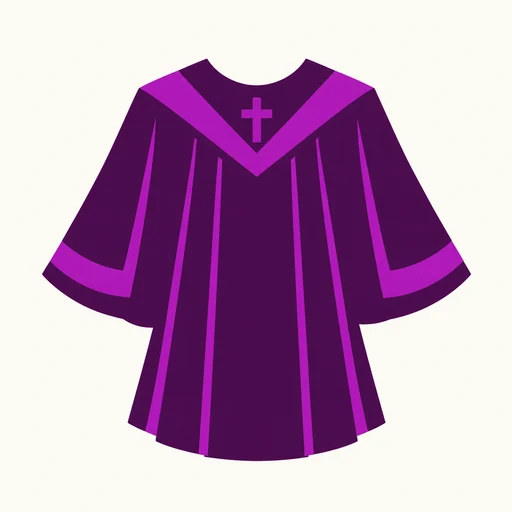

The first time I sized robes for our children's choir, I did what most volunteers do. I held a robe up to the child in front of me, said a prayer, and wrote the size on a clipboard. By the spring program, three of those robes were dragging on the risers and one zipper had stopped halfway up a second grader who had grown two inches since Christmas. That was the year I stopped guessing and started measuring. I am Gloria Pettaway, and I have sung alto in the sanctuary choir at Greater Mount Zion for over thirty years. I am also the volunteer who keeps the robe closet in the fellowship hall.
The robe I use as my baseline is the IvyRobes kids choir robe, a lightweight polyester ceremonial gown with a zipper and a shawl collar. It is listed as a loose fit, ankle length, and no stretch. Those details tell you almost everything about how to size it. A loose fit gives you room in the chest and shoulders. No stretch means you cannot count on the fabric to give when a child raises their arms. Ankle length means the hem has to land near the ankle bone, not somewhere between the knee and the floor. Children grow in bursts, and a robe that fits in September can look like a hand-me-down by Easter. The right size is the one that fits the chest now and has enough length to be hemmed later.
The robe that fits in September is not the robe you need in April
Start with the child's measurements today, then read the fit notes before you order. The IvyRobes robe is loose, ankle length, and no stretch, so the tape matters more than the age on the label.
Amazon See the IvyRobes Kids Choir Robe on Amazon →Step 1: Measure the child in the clothes they will wear under the robe
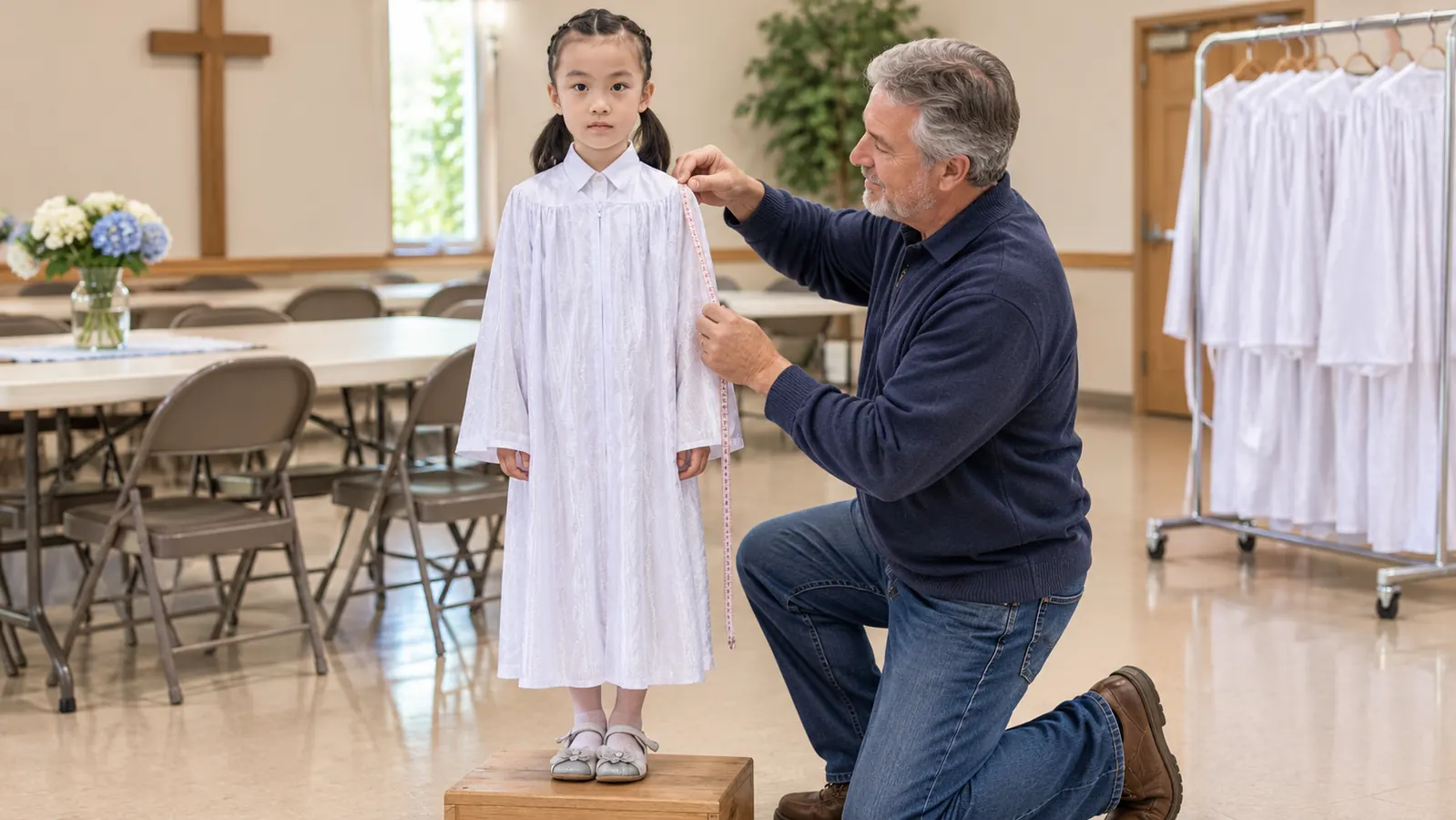
You need three numbers: chest, shoulder to ankle, and neck. Use a soft tape and write the date next to each number. Do not measure over a bulky sweater if the child will wear a collared shirt on Sunday. Do not measure over pajamas either. The robe has no stretch, so the chest measurement is the one that decides whether the zipper closes without pulling. Stand the child straight, not stiff. Ask them to breathe out and let their shoulders drop. Measure around the fullest part of the chest, keep the tape level, and put two fingers under it. That gives you room for a shirt and for a Sunday lunch.
For length, measure from the top of the shoulder to the ankle bone, not the floor. The IvyRobes robe is ankle length, so you want the hem to land near that bone, not under the shoe. Write the numbers on a card and keep it with the robe. If you are sizing a whole choir, measure every child on the same afternoon. Children compare heights, and a parent will tell you the child is a size larger than the tape says. Trust the tape. The tape does not care who is tallest in the fourth grade.
The neck measurement is the one people skip. It matters because the shawl collar sits close to the throat, and a child will tug at it all through the service if it feels tight. Measure around the base of the neck with one finger under the tape. If the child wears a buttoned collar and a sweater vest in December, measure over that layer. In Florida we do not have many thick winter shirts, but we do have children who dress up for the Christmas program. Write that neck number down even if you think you will remember it. You will not remember it.
Step 2: Choose for the season, not the Sunday
A children's choir robe is not a winter coat. You are not buying for one cold morning. You are buying for a program cycle, usually from the start of rehearsal through Christmas or Easter. That means you need to think about the child's growth rate, not just the child in front of you. Most children in the elementary years grow about two inches a year, and they do not spread it evenly. A child can stay the same height for months and then shoot up over a summer. If you size only for today, the robe will be short by the spring concert.
If you size too far ahead, the hem will swallow the child's shoes and the zipper will gap at the neck because the shoulders are too wide. A robe that is too big is not a shortcut. It is a different fitting problem. The IvyRobes robe is a loose fit, so you have a little room in the chest and shoulders. You do not have room in the length. Ankle length means ankle length. I would rather hem a robe that is slightly long than try to add length to one that is short. A temporary stitch in the hem can be taken out, but a robe that hits mid calf cannot be stretched.
The listing I use shows a size 33, and that number is a starting point, not a guarantee. Compare the tape to the size, not the child's age. I also write down the child's shoe size on the card because the hem is affected by shoes. A child in flats will need a different length than a child in loafers with a thick sole. The robe is ankle length, so the hem should clear the top of the shoe without dragging.
Step 3: Check the zipper and the shawl collar before you cut any tags
The zipper is the first thing that fails a children's choir robe. Not because the zipper is bad, but because children pull it at an angle and then yank. Put the robe on the child, close the zipper all the way to the top, and ask them to raise both arms, sit down, and bend forward. If the zipper pulls away from the neck or the shawl collar lifts off the shoulders, the chest is too tight. The shawl collar should sit flat across the back of the neck. It should not stand away like a shelf.
The robe has no stretch, so the collar is not going to relax with wear. If it stands away in the fitting, it will stand away in the processional. Check that the child can turn their head without the collar digging into their chin. Before you cut any tags, check the care label. The IvyRobes robe is hand wash only. If you cut the tag off and put the robe in the church washing machine, you will find out the hard way that hand wash only is not a suggestion. I keep a small mesh bag in the closet for the zipper pulls so they do not catch on other robes in the wash.
Have the child walk up and down the fellowship hall in the robe. If the hem catches under their heel, mark it with painter's tape. Do not let them wear the robe home. Do not let them eat in it. Polyester is lightweight and it will pick up every spill in the fellowship hall. I learned that one from a plate of barbecue and a very sorry third grader. A robe can be washed. A robe with barbecue sauce on the front and no time to dry cannot. Check the walk before you check anything else.
Step 4: Build a fitting routine for the whole choir
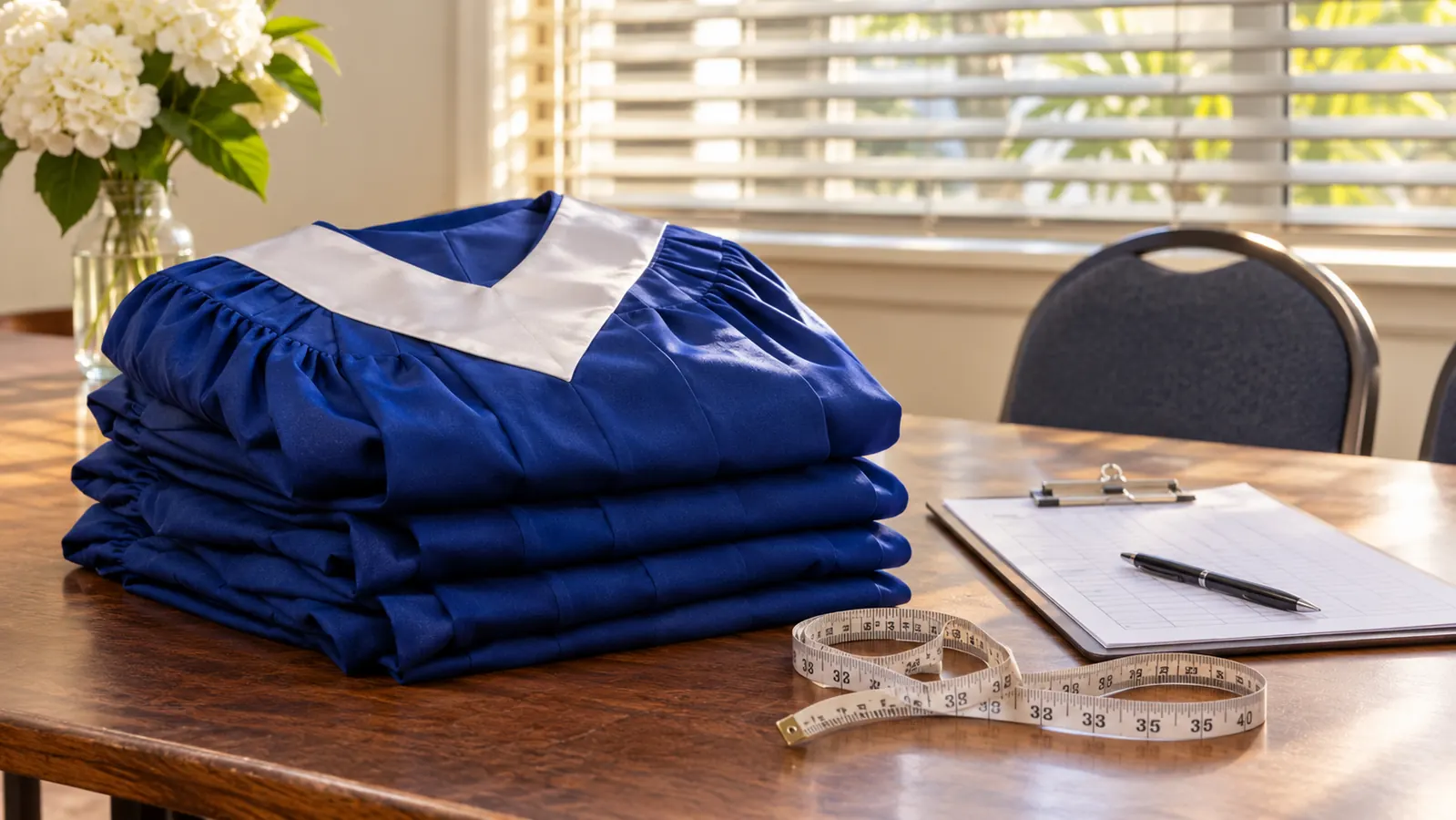
One child at a time is how robes get lost. I use a clipboard with a column for name, chest, shoulder to ankle, neck, robe number, and the date. I write the robe number inside the collar with a fabric marker, not the child's name. Names change, grades change, and a robe that fits one child in October will fit a different child next year. I fit the tallest children first, then work down. That way I know which robes are too long and which ones are already spoken for.
I keep two robes on the rack as spares, one a size larger and one a size smaller, because a child will always show up on the Sunday of the program with a growth spurt and a parent who forgot to tell you. That is not a lack of faith. That is just children. After the fitting, I hang each robe on a separate hanger with the size card clipped to the hanger. I do not fold them in a pile. Polyester will hold a crease, and a robe that has been folded in a bin since August will look like it has been folded in a bin since August.
I also keep a small box of safety pins and a spool of thread in the robe closet. Not to make permanent alterations during the fitting, but to hold a hem in place until I can stitch it properly. A safety pin is not a hem. It is a delay tactic. But on a Wednesday night before a Sunday program, a delay tactic is sometimes the only thing standing between you and a child walking down the aisle on a hem that is two inches too long.
Step 5: Plan for the next growth spurt before you store the robes
At the end of the season, I wash every robe according to the care label. The IvyRobes robe is hand wash only, so I fill the fellowship hall sink with cool water and a little gentle detergent, rinse it well, and hang it to dry on a plastic hanger. I do not put it in the dryer. I do not send it to the church laundry. Hand wash only means hand wash only. While the robes are drying, I update the size cards. I write down which children are near the top of the size and which robes need to be replaced.
I also note the hem allowance. If a robe was let down during the year, I write that down so the next person does not try to let it down again. The goal is not to keep perfect records. The goal is to keep the next fitting from starting at zero. Then I store the robes in the closet with a cedar block. Not because cedar is magic, but because a fellowship hall in Florida gets humid and a closed closet can smell like a wet basement by July. I leave the closet door open for a day after a program.
The week before the program, I do a final fit check. I do not measure everyone again. I just have each child put on the robe, zip it up, and walk the length of the fellowship hall. If the hem clears the floor and the zipper stays flat, they are done. If not, I make a note and fix it that night. The final check takes less time than the first fitting because the hard decisions are already made. That is the whole point of sizing early. You want the last week to be about music, not hems.
What Else Helps
A few small things make the sizing easier. Keep a soft tape in the robe closet, not in the church office. Keep a fabric marker and a notebook. Ask parents for the child's height in March and again in August. If the children's choir is small, fit every child twice a year, once at the start of the season and once six weeks before the program. Do not wait until the week of the program to discover that a child has grown. A five minute fitting in August can save a two hour hemming session in December.
If you are choosing between two sizes, choose the one that fits the chest and shoulder, then deal with the hem. A hem can be stitched. A chest cannot be added. That is the rule I use with the IvyRobes robe because it has no stretch, and it has kept our children's choir out of the kind of panic that happens five minutes before the processional. The robe is not the hard part. The hard part is remembering that children are not the same size in April that they were in September.
One more thing. Do not buy a robe for a child to grow into over two years. A children's choir robe is not a coat. It does not need to last until middle school. It needs to last through the program and maybe one more season. If the robe is too big, the child will be uncomfortable, and the parent will be the one who has to tell you. Buy for the year you are in, with a little room in the hem. That is enough.
The zipper does not fail because it is weak. It fails because a child grows two inches and the chest has no stretch.
Measure once, then choose the robe that can take the next growth spurt
Start with the chest and shoulder measurements, leave room for the length, and check the zipper before the first rehearsal. The IvyRobes kids choir robe is loose, ankle length, and built for a program cycle, not a single Sunday.
Amazon See the IvyRobes Kids Choir Robe on Amazon →