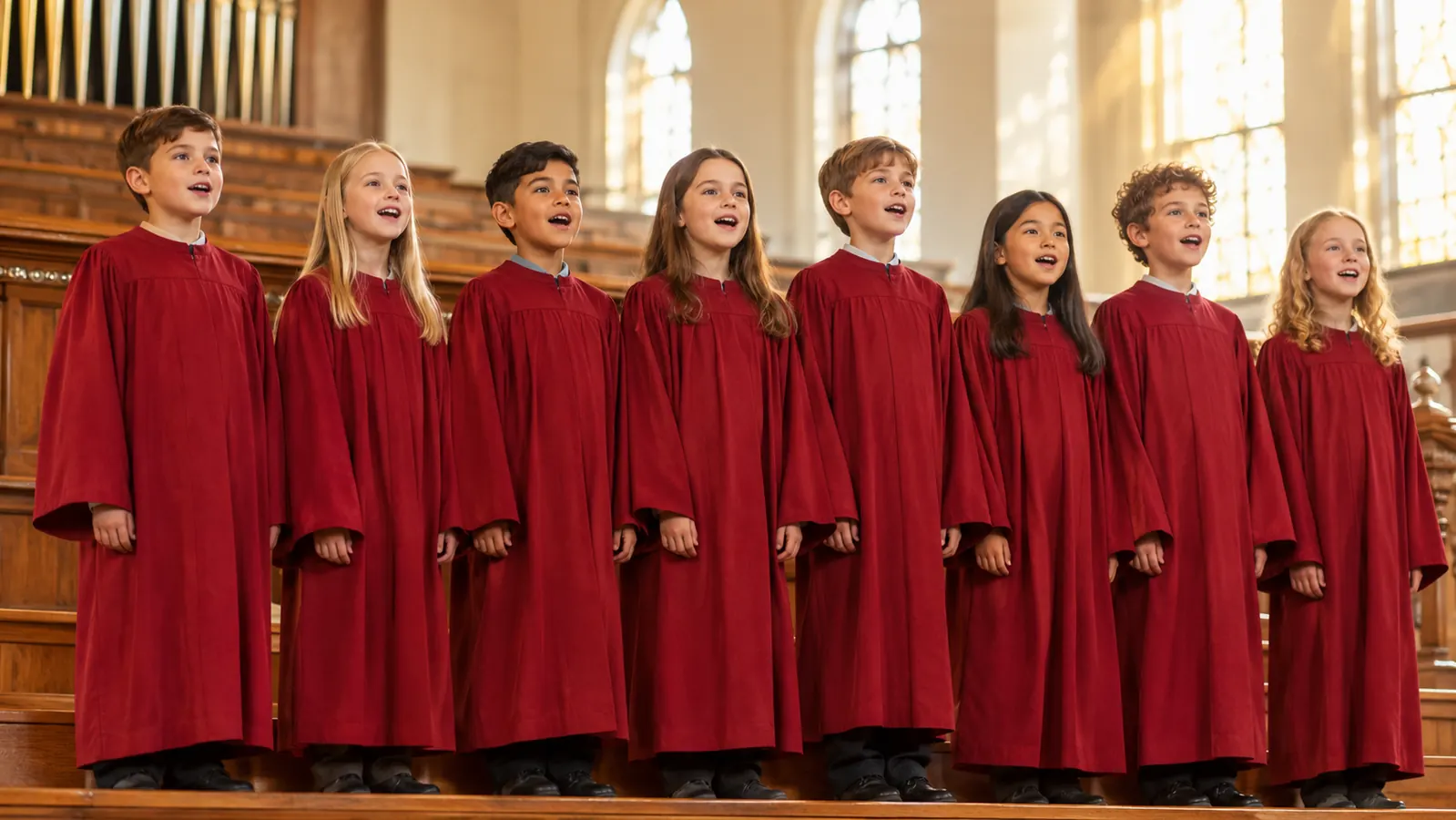
Five minutes before the processional is when a zipper decides whether it likes you. I have stood in the fellowship hall with a nine-year-old half inside a robe, a choir already seated in the loft, and one pull tab between me and the first note of the opening hymn. So when I tell you what I think of the IvyRobes kids choir robe, understand that I am not grading it on a hanger. I am grading it at 10:52 on a Sunday morning, with the sanctuary already warm, thirty voices waiting, and a child asking me if he can take it off yet.
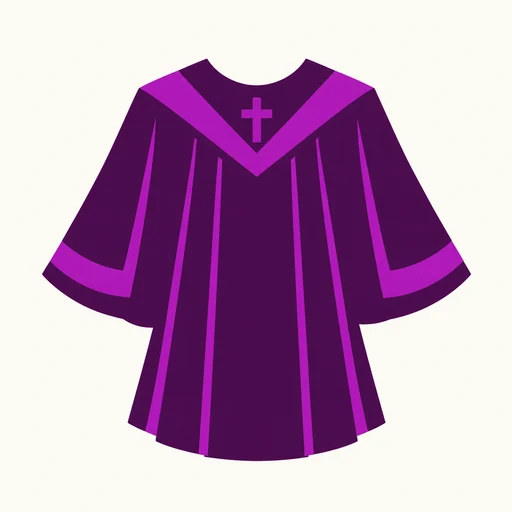
Here is the honest version, the part the listing photograph does not say out loud. This is a costume. The product page files the occasion as Halloween, the fabric is polyester, the weight is lightweight, and the care tag inside says hand wash only. It is not a made to measure vestment from a church supply house and it does not pretend to be. What it is: a ceremonial gown with a zipper down the front, a shawl collar, a loose fit, and an ankle length cut, sold in single number sizes. For a children's choir that sings three or four times a year, those details cover most of what actually matters and none of what does not.
The Quick Verdict
A costume that does a real choir robe's job for three or four services a year, provided you size up and keep it out of the washing machine.
Amazon Check Today's Price →Thirty children, one processional, five minutes to spare
This is the robe that got our children's group down the aisle on time. Measure a real child before you order, then check today's price while the sizes you need are still in stock.
Amazon Check Today's Price on Amazon →How I've Used It
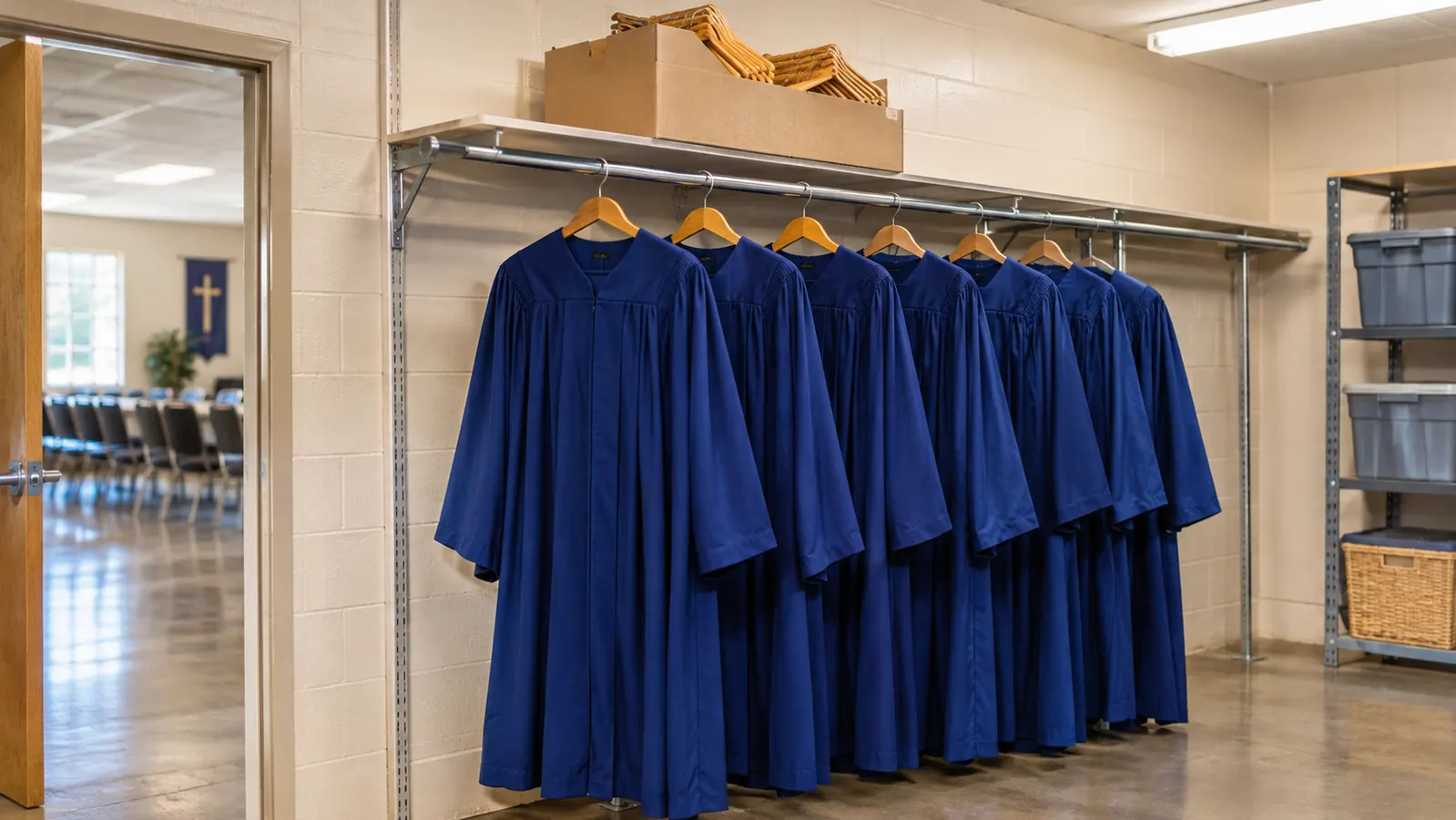
My name is Gloria Pettaway. I am sixty-three years old, I have sung alto at Greater Mount Zion in West Palm Beach for more than thirty years, and somewhere along the way I became the volunteer who keeps the robe closet in the fellowship hall. I wash what needs washing, I hem what needs hemming, I keep a shoebox of spare zipper pulls and a measuring tape in my pocketbook, and I am the one who gets the call when a child arrives without a robe ten minutes before the service begins.
Our Sanctuary Choir is roughly thirty voices and sings the Sunday morning service. The children's group borrows the loft at Christmas and Easter and for the spring concert, which means I dress somewhere between twelve and twenty kids three times a year, in a building where the air conditioning is losing the fight by the second service.
We bought the IvyRobes set for the children for three plain reasons. We needed them uniform. We needed to replace them one piece at a time as children grew, rather than reorder a matched set every other year. And we needed them to arrive before the date we needed them, which is not a small consideration in December. I have now put these robes through two Christmas Eves, two Easter mornings and one spring concert, and I have opinions I did not have on the day the box came.
The Care Label Is the Whole Story
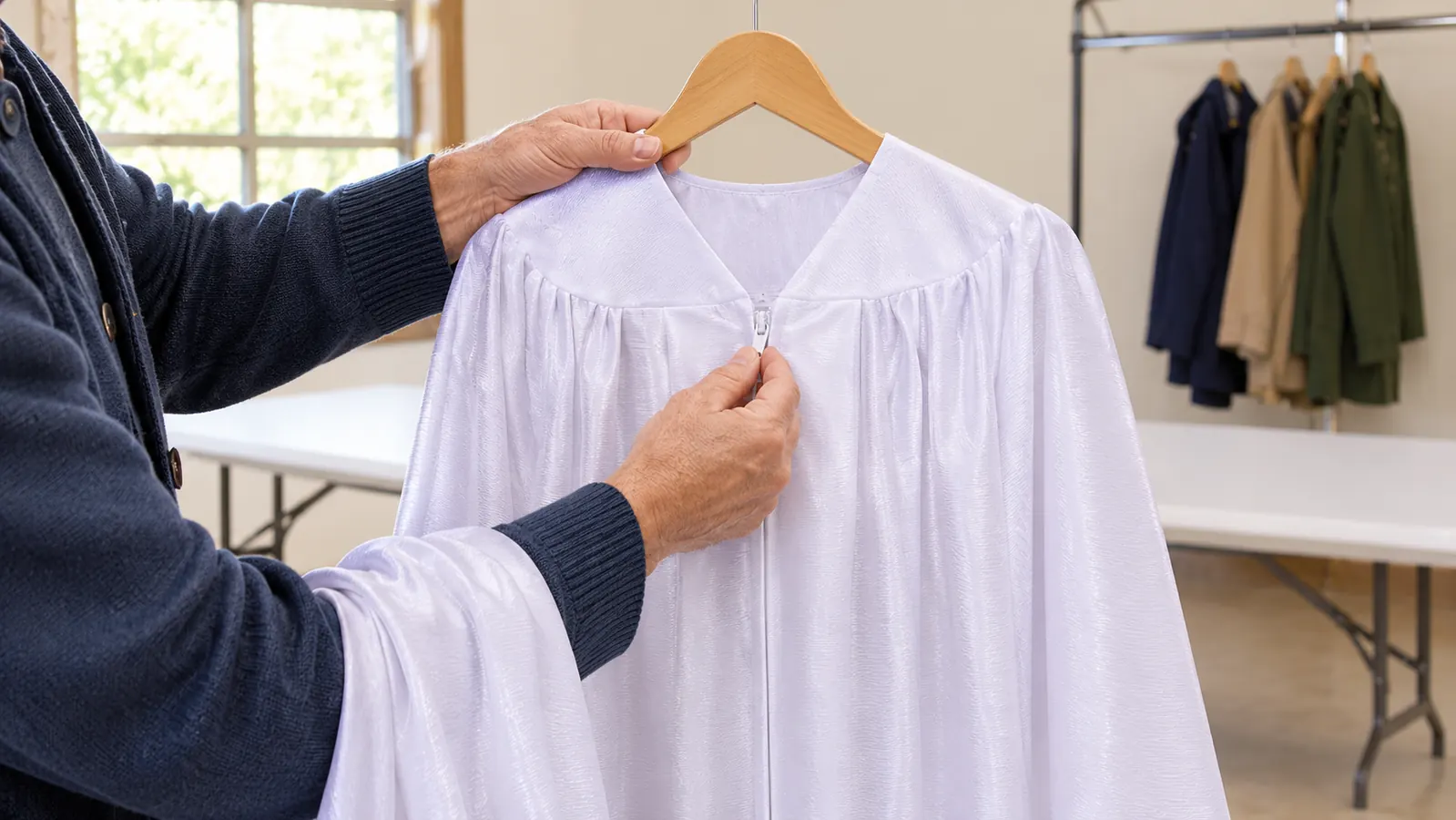
The single most important line on this garment is not in the listing photograph. It is on the tag inside, and it reads hand wash only. The fabric is polyester, lightweight, and it has no stretch. Hand wash only is not the nervous suggestion of a cautious manufacturer. It is what keeps a lightweight polyester garment from going shapeless at the seams and what keeps a zipper from curling at the tape over a couple of seasons.
With thirty adult robes in a closet, a washing machine is the difference between a chore and an afternoon. With twenty children's robes, hand washing is genuinely an afternoon. What we do is fill the deep sink in the fellowship hall with cool water and a small amount of gentle detergent, put in four or five robes at a time, let them soak, work them by hand for a few minutes, rinse, and hang them on a line we strung across the back hallway. Zip them closed first. A closed zipper does not snag the robe beside it in the water and does not fight you later when it has dried into a bend.
The good news is that polyester dries fast, which in Florida humidity is not a small thing at all. A line of robes is dry by the next morning and smells like nothing, which is what you want in a garment that sits against a child's neck under hot lights. Two seasons in, none of ours has faded, pilled, or come apart at a seam, including the two that went through the wash cycle by accident when a helper did not read the tag.
The bad news is the same news. If nobody in your building can give up a Saturday to a sink and a clothesline, stop here and buy something the label says can go into a machine. I would much rather tell you that in a review than have you find it out in December with twenty damp robes and a service at eleven. The IvyRobes robe is a good piece of costume work, but it is not a labor saving garment and it never claims to be.
Sizing Is Where These Robes Are Won and Lost
Sizes come as a single number rather than a child's age. Mine ran as size 33 and the numbers step from there. That means you measure a child, shoulder to ankle, and you pick the number that clears the ankle, not the number that matches the age on the birthday cake. Ignore the age entirely. The age on the tag of a costume is a guess, and the measuring tape is not.
The fit is described as loose, which helps, because a loose cut layers over whatever a child wore to church without bunching up at the shoulders. But the fabric has no stretch at all, so there is no forgiveness anywhere in this robe. A child between two sizes needs the larger one, full stop. The zipper will not save you, the loose cut will not save you, and the shawl collar will not save you. There is no give in that polyester.
The length is ankle length, and that is the detail that decides whether you own a robe or a tripping hazard. On a child who fits it, ankle length is correct and it looks right on the riser steps. On a child who grows two inches over a summer, ankle length becomes floor length, and floor length becomes something to step on during a processional with a full loft watching.
Because the fabric is solid and unpatterned, hemming is genuinely easy and letting a hem back down later is just as easy. There is no pattern to match and no seam to disguise. My habit now is to buy for the tallest child in the group I am robing and hem the rest to fit. That way the robe a small child wears in December can be let down for a taller one two years later, and the closet keeps working.
Two Christmas Eves, two Easter mornings, one spring concert, and the same zippers still close. That is most of the review right there.
What Holds Up Under Sanctuary Lights
The loft is the hottest spot in our building. By the second service the lights are on, the rail is full, and the air has gone still. Lightweight polyester is the reason these robes work in that room. The children are not overheated, they are not flushed, and they are not fidgeting with a garment that feels like a winter coat. In a cold sanctuary up north in January the same fabric would be too thin, and I want to be plain about that rather than let a reader assume otherwise. This garment is built for a warm room.
Under the lights, the solid fabric reads clean. There is no print to wrinkle into odd shapes in the Christmas photograph, nothing dated to look back on in five years, and nothing for a nervous child to fixate on while the congregation sings. When the whole group is dressed the same, the line looks tidy from the back of the sanctuary, and the back of the sanctuary is where nearly everyone is sitting.
The shawl collar sits flat against the chest and takes a small pin or a ribbon without gaping away from the body. If your children's group uses a colored ribbon or a small corsage at Easter, the collar will hold it. That sounds like a minor point until you have watched a pinned ribbon drag a cheap neckline out of shape in the middle of the second verse and had no way to fix it from the front row.
What the robe does not do is drape. It is lightweight and unlined in feel, and it hangs the way an inexpensive polyester gown hangs. A child old enough to compare it to the heavy robes the adult choir wears will notice the difference in about four seconds. That is not a flaw so much as the honest description of what you are buying, and it is worth knowing before you promise a seven-year-old that she will look exactly like the grown-ups.
The Zipper, the Collar, and the Hem
A zipper down the front is the correct closure for a children's choir and I will argue the point with anybody in the fellowship hall. Buttons look traditional and take forever, and a child who is already nervous in front of a congregation cannot manage small buttons under a time limit. A zipper closes in one pull. I can dress eight children in under five minutes with a zipper. I could not do that with buttons, and I have tried.
The zipper is also the part that fails first on any inexpensive garment, and this one is no exception to the rule that zippers need to be handled with manners. Teach the children to hold the tab straight and pull slowly. Do not yank it, do not force it past a caught thread, and do not let a child zip up over a shirt collar, which is how tabs bend. Ours have held up, but I have replaced two pulls in two seasons and I keep spares in the closet for exactly that reason.
The shawl neckline is generous rather than tight, which matters for the children who complain about anything touching their throat. Nothing on this robe is fitted. It is a loose ceremonial gown from shoulder to ankle, and that looseness is doing real work when a child is wearing it over a Sunday shirt and a sweater in February. The one thing I would warn a robe committee about is the loose cut plus no stretch. Loose is forgiving over clothing and unforgiving about length, and length is what ends up on the riser step.
The hem is where I spend my own time every October, and I have made peace with that. An inch of clearance above the shoe is right. Two inches looks short on the riser. Dragging on the step is wrong and dangerous, and it will happen to somebody in your group if you order by age instead of by measurement. Solid fabric, a straight stitch, and a Saturday afternoon will solve it.
What I Liked
- Zipper front closes fast in a processional line, which buttons cannot do
- Lightweight polyester stays bearable under warm sanctuary lights
- Ankle length looks correct on riser steps when it is sized by measurement
- Solid, unpatterned fabric hems and lets down easily with no matching
- Loose cut layers over street clothes without bunching at the shoulders
- Shawl collar sits flat and holds a pin or a ribbon without gaping
- Survives repeated hand washing and line drying without fading or pilling
Where It Falls Short
- Hand wash only, so a set of twenty is a Saturday at the sink
- No stretch in the fabric, so sizing has no margin for error at all
- Ankle length becomes a tripping hazard the moment a child grows
- Lightweight means thin, and it will not keep a child warm in a cold church
- Feels like a costume next to a heavy vestment, because that is what it is
- Zipper pulls need watching and replacing occasionally
Who This Is For
This is for the children's choir director, the Sunday school teacher, the woman who somehow ended up in charge of the Christmas program, and the robe committee that has to dress a group of kids on a budget that will not stretch to a vestment order. It is also for the church that needs matching robes for a nativity scene, a resurrection tableau, or a spring concert, and needs them in hand before the date rather than after it. If your group sings three or four times a year and you can give one Saturday a season to a sink and a clothesline, these will do the job and they will look right doing it.
It is also a reasonable fit for a program that dresses children who are not all the same size, because the single number sizing plus an easy hem means one order can cover a range of ages. I have robed a six-year-old and an eleven-year-old out of the same order, and nobody in the congregation could tell which was which from the third row.
Who Should Skip It
Skip it if the robes will be worn every single Sunday by the same child for years, because the fabric and the hand wash routine are not built for that pace and I will not pretend they are. Skip it if nobody in your building can hand wash and line dry twenty garments, since a machine will shorten their life considerably. Skip it if you need real weight and drape, if your sanctuary runs cold, or if the child is between sizes and no one is available to hem. Those are not small objections. They are the honest limits of a costume that happens to work very well as a children's choir robe.
One last thing I tell every robe committee that asks. Order one robe first. Put it on the tallest child and the shortest child in the group, walk them up and down the riser steps, and see it with your own eyes before you commit to a full set. An afternoon and a return label will teach you more than any review, including this one.
Measure the tallest child, then read the care tag twice
That is the whole of my advice after two seasons in the robe closet. Order the size that clears the ankle, keep the zipper closed in the wash, and check today's price before the Christmas deadline gets close.
Amazon Check Today's Price on Amazon →