
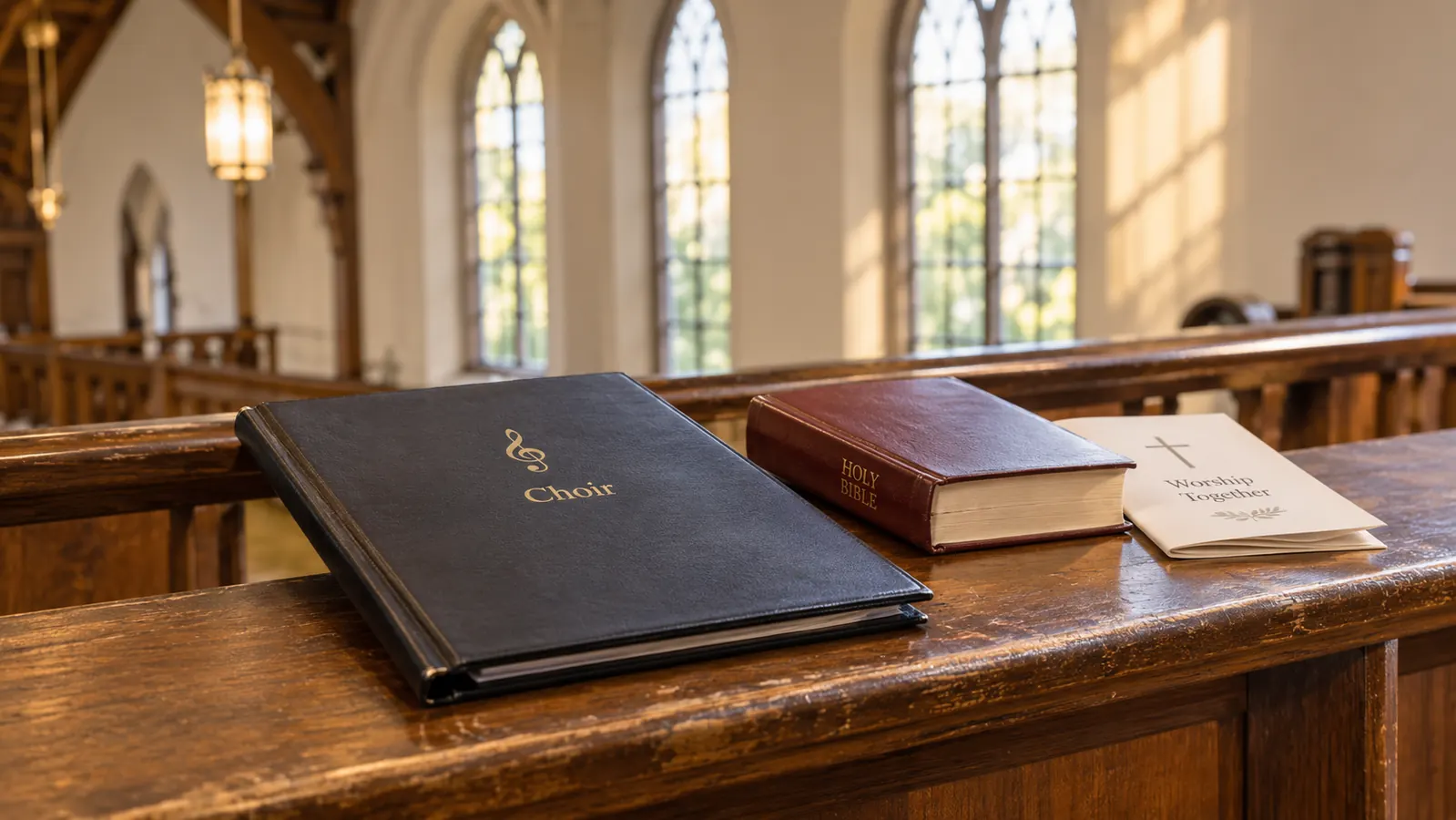
Every choir closet I have ever opened has a drawer of dead music folders in it. The vinyl ones split along the seam by February. The cardboard ones drink the Florida air and curl up at the corners. The thin two pocket ones let a soprano's copy of the anthem slide out somewhere between the second verse and the benediction, and you find it three weeks later under a pew. When our church had a little money left in the spring budget and I was finally asked to sort out the music side of the closet, I ordered a single YOTINO sheet music folder to test before I asked anybody to approve thirty of them. This is the plainly honest version of what I found, including the parts that made me slow down and think before I ordered more.
I am the volunteer wardrobe coordinator at Greater Mount Zion, which means anything cloth or paper that our Sanctuary Choir breaks eventually lands on my table in the fellowship hall. Music folders are not officially my job. They show up anyway, usually the week before Easter, cracked open with somebody's marked up music falling out. So I am picky in a very unglamorous way. I care whether a thing lasts past one season, whether it opens flat on a stand, and whether it rattles or clicks while the pastor is praying.
The Quick Verdict
A stiff three ring folder with a hinge that stops where you put it and rings that held through a full choir year. The fixed strap is the weak spot. Everything else earned its place in our closet.
Amazon Check Today's Price →The folder our alto section actually kept
13 by 10.2 inches, PU leather over stiff board, three rings rated for up to 220 sheets, and a hinge that opens to 120 or 180 degrees. Enough for a full season of music, with two pockets for the bulletin.
Amazon Check Today's Price on Amazon →How I've Used It
I tested one folder for four weeks before I ordered more. It went to Wednesday rehearsal, two Sunday services, a funeral, and the spring concert, which is about as much as any folder sees in a month. It rode in my tote bag on the passenger seat of a hot car. It sat on a music stand in a loft that reaches eighty five degrees by the second service. It got knocked off a chair onto the tile outside the fellowship hall. Nothing broke. The rings held. The cover took a scuff on one corner and that was the whole of the damage.
The first real test came on a Sunday in late September when the air conditioning in the sanctuary quit during the second service. We sang three anthems and a piece for the retiring offering, and the loft hit ninety degrees by the last one. My folder was damp at the edges from my hands and it did not warp, which is more than I can say for the cardboard folders we used to keep in that closet. I wiped it down with a paper towel after the benediction, set it spine up on the shelf, and by Wednesday it was flat again with no ripple in the cover.
After that month I ordered more, enough for the soprano and alto sections with a few spares, and we handed them out at the start of the fall. Our Sanctuary Choir runs about thirty voices on a good Sunday. Not everyone wanted one, and I did not push. The ones who took a folder are the ones who sing every week and who were tired of carrying a hymnal and three loose anthems under one arm while climbing the loft stairs.
What I watch for now is the second month, not the first. A folder always looks good in the first month. Our YOTINO folders have been through a Christmas cantata, an Easter service, a spring concert, and the start of another fall, and the ones still in the closet are still doing their job. Two came back with a torn page, which is a paper problem, not a folder problem. One came back with a ring that had been forced the wrong way, and I set it right with my thumb in about four seconds. That is a decent record for a church closet with thirty volunteers reaching into it.
What Nobody Tells You Before You Buy One
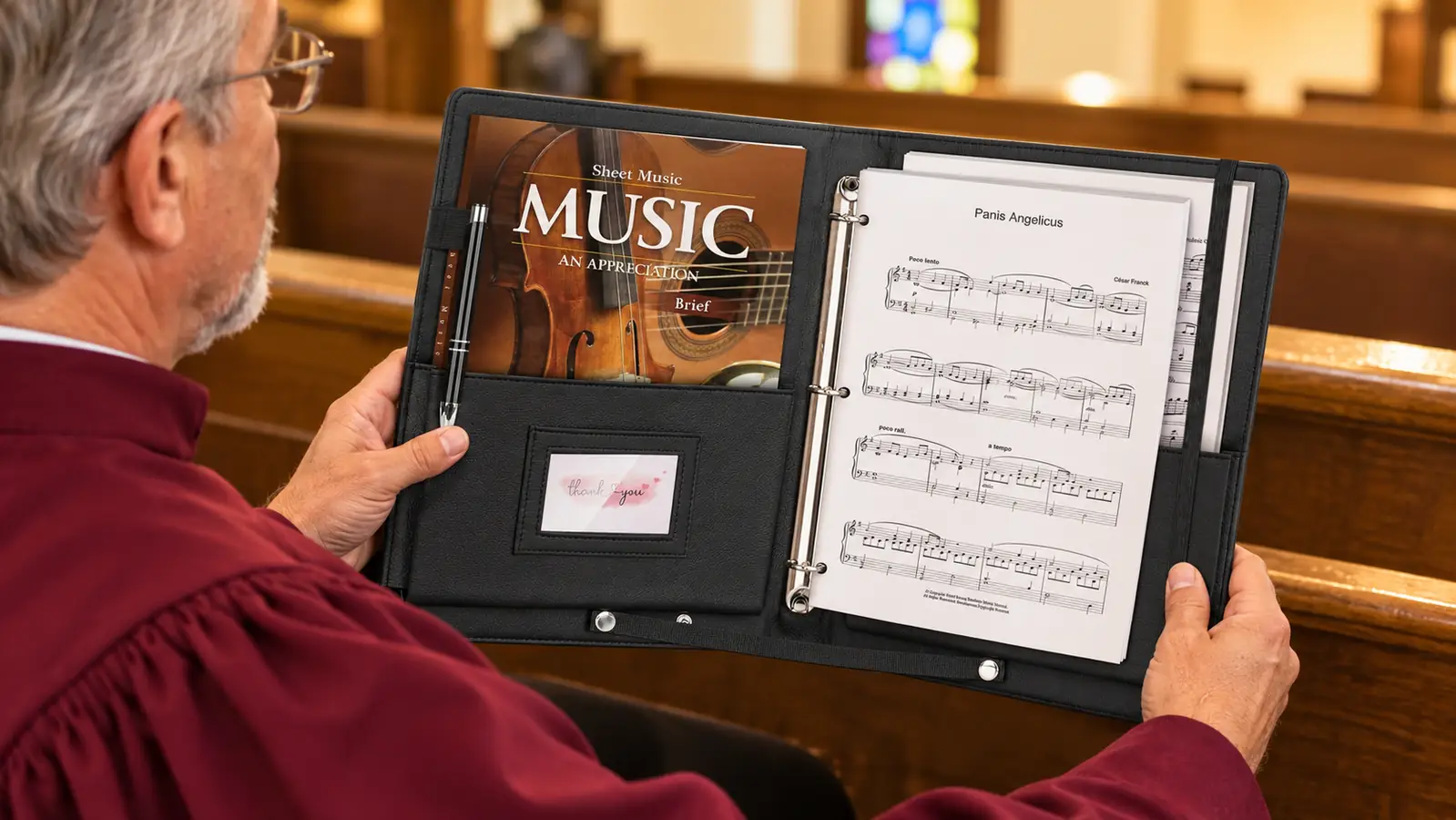
Here is the part the listing does not spell out. A three ring folder is only as good as the paper going into it. If your music is punched for two rings, or punched in the wrong spot, the rings will fight you every rehearsal. This folder is built around three rings and A4 paper, which is the size most printed choral octavos come in. Check a sample of your own music before you order a stack for the whole section. About a third of our active octavos were punched for something else, and I spent a Saturday night with a hole punch and a roll of reinforcement stickers fixing that.
That punching happened on a Saturday afternoon in the fellowship hall with the ceiling fan turning and a glass of sweet tea going warm beside me. Two of the octavos in the stack were older than I am, printed in the seventies, and the paper had gone brittle enough that the first hole I punched cracked straight through the margin. I set those two aside and copied them instead. If your choir closet has music from the previous century in it, and most do, plan on losing a page or two to the hole punch and budget the time for it. Nobody warns you that the prep is the bigger job.
The second thing nobody mentions is the hinge. Most binders open one way, and standing in a loft holding the folder at chest height with one hand, that one way is usually wrong. This one opens to about 120 degrees for rehearsal or flat to 180 degrees for the piano. That sounds like a small line in a product listing. In a choir loft it is the whole argument for choosing this over a plain ring binder off the shelf at the office store.
The folder measures 13 inches by 10.2 inches, a little larger than the A4 sheet that goes inside it. That extra room matters, because a folder that fits the paper exactly will tear the top hole within a month. The fastener is rated for up to 220 sheets. Nobody in a volunteer choir needs 220 sheets in one folder, and nobody should carry that weight in one hand either. I keep sixty to eighty pages in mine, and at that load the rings still meet cleanly in the middle.
A folder that will not lie flat is a folder you fight with in front of the congregation. That hinge is the whole purchase.
What Held Up and What Did Not
Three months in, the boring parts held. The rings did not pull out of the spine. The corners did not go soft the way cardboard does. The hinge still stops where it should stop instead of sagging wide and spilling music onto the risers. If you have watched that happen during a processional, you already know what it is worth for it not to happen.
The Christmas cantata was the hardest night of the year for these folders. We had a full program, twelve pieces, and the loft was crowded because a youth choir from a sister church joined us and had never seen our setup. Folders got passed down the row, set on the floor, stacked on a folding chair, and picked up again in a dark loft between numbers. The next morning I found one under a pew with a coffee ring on the cover, and the pages inside were dry and still in order. That is the whole case for a stiff cover, right there, in one sentence.
There are two pockets inside and I use both. One holds the folded bulletin and the prayer list. The other holds an index card with the alto entrance I keep missing on the second anthem. There is also a fixed strap sewn inside the cover. It does not adjust, so you cannot cinch a thick stack down with it. That is the one place the design gave me less than I wanted, and I would rather tell you now than have you find out in October.
Florida is hard on anything built in layers, and a sanctuary under lights in July is harder. The PU leather cover wipes clean, which matters more than you would think when somebody with hand lotion on passes a folder down the row. It has not peeled at the edges. It does feel warm and slightly slick when your hands are damp, and in a hot loft you will notice that. It is not a defect. It is what the material does in a humid room, and it is worth knowing before you buy.
What It Replaced
For years we used the elastic stay folders, the kind with a cord running corner to corner that holds everything against the back board. They are cheap, they are light, and they do one thing well, which is keep loose paper from sliding out. What they do not do is let you turn a page. Every time you move a sheet you are working against the elastic, and in a dim loft with a folder in one hand that is a small fight thirty times a service.
The three ring folder solves that and creates a different problem, which is that your music has to be punched and in order. That is real work up front. I spent a Saturday with a hole punch and a stack of octavos and a roll of reinforcement stickers, and I do not regret a minute of it. But if your choir is not willing to do that prep, an elastic folder is honestly the better fit for you, and I will not pretend otherwise. The YOTINO folder is the better tool for a choir that rehearses weekly and marks its music. It is not a substitute for that prep.
The Honest Drawbacks
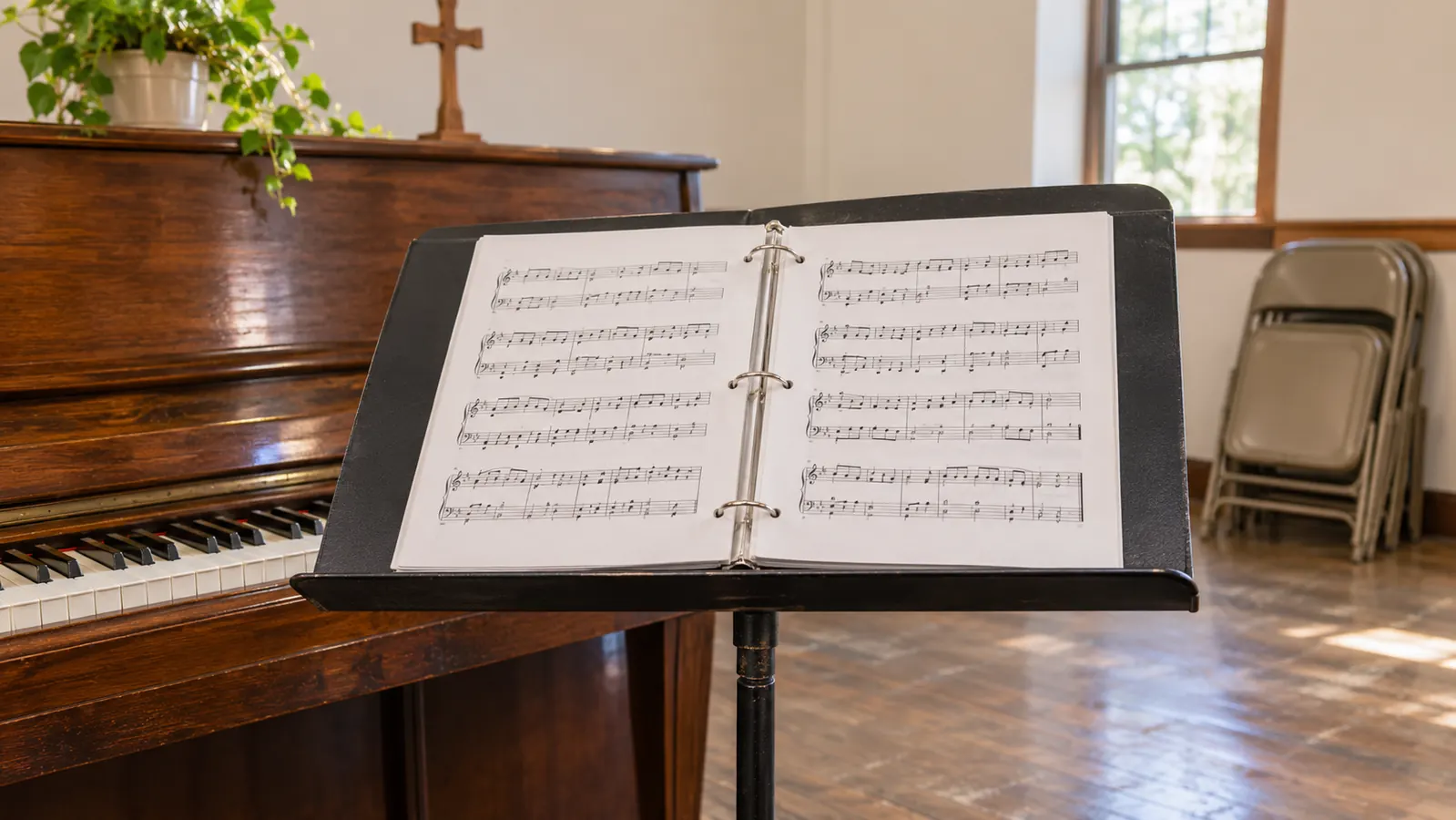
The drawbacks start with weight. A folder holding eighty pages of music inside a stiff PU cover is not light, and if you are the sort of singer who holds music in one hand for an entire service, your wrist will tell you about it by the closing hymn. This is a folder to set on a stand or hold with both hands, not to wave around during a processional. Two of our older sopranos asked for the old elastic folders back for that reason alone.
The second drawback is that this is a three ring system, full stop. If your music is not punched for three rings, you are buying a hole punch too. The third is that the rings are small enough that a page with a torn hole will escape. I lost one anthem that way and found it behind the piano three weeks later. Check the holes in your oldest music and reinforce them before they tear. That part is on you, not on the folder.
The fourth is the size, and this one cost me two Sundays. Our loft rail measures four and a quarter inches across, which I know because I went up there with Walter's tape measure on a Monday morning after the second week in a row that a folder slid off and hit the riser during the closing hymn. A folder 13 inches long laid flat on a rail that narrow is a lever waiting to fall. Set at 120 degrees with the spine resting on the wood and the bottom edge tucked against the rail, it stays put. It took me two weeks to learn that, and I would rather you learn it in one afternoon. Measure your rail before you order thirty.
What I Liked
- Rings held through a full choir year without pulling loose from the spine
- Hinge opens to 120 degrees for rehearsal or flat to 180 degrees for the piano, and stops where you put it
- Two inside pockets hold the bulletin, the prayer list, and a marked index card
- 13 by 10.2 inches leaves enough room around an A4 sheet that the top hole does not tear
Where It Falls Short
- The inside strap is fixed, so it cannot be tightened down over a thick stack
- Heavy once it is loaded with sixty to eighty pages, which matters if you sing one handed
- A torn page hole will let that page slip past the small rings
- Depends on your music being punched for three rings, which is work somebody has to do
A Word About That 4.2 Star Rating
The listing shows 4.2 stars across more than seven hundred ratings, and I want to be plain with you about that. It is a good average, not a perfect one. Roughly one buyer in five was not fully pleased, and my folder is not going to talk them out of it. Read the low reviews yourself before you order thirty of anything for a whole section. My experience has been good, and I have told you exactly why. Yours will depend on what you put in it and how you treat it.
What I would tell another choir director is this. Buy one first. Put your heaviest Sunday music in it, carry it through a rehearsal and a service, and see whether the hinge angle suits the way your loft is laid out. Some lofts are tight and you will sing with the folder nearly closed. Some are generous and you can lay it flat on a rail. The folder handles both, but you should know which one you are before you spend the section budget.
Who This Is For
This is for the choir that sings from printed octavos every week and is tired of loose paper. It suits a section leader who marks her music heavily and needs every marking in one place, and it suits a director who wants every folder in the section to open the same way at the same angle. It also fits a piano player who needs the thing to lie flat beside the keyboard. If your choir sings mostly from memory and a hymnal, you do not need this, and I would rather you save the money for robe hems.
Who Should Skip It
Skip it if your music is punched for two rings and nobody at your church will spend a Saturday with a hole punch. Skip it if you want a folder you can fold in half and tuck in a purse. Skip it if your singers refuse to carry anything heavier than a bulletin, because a loaded YOTINO folder has real weight to it. Skip it if you need one folder to hold a hundred and fifty pages, because at that load you will fight the rings every single week. And skip it if you only sing four times a year. A cheap folder is fine for four times a year.
Thirty years in a choir loft taught me that the small equipment matters more than anybody admits. A robe that hangs right. A hem that does not drag on the risers. A folder that opens right and stays where you put it. None of that is spiritual. All of it clears the way for the thing that is, and it keeps a volunteer from spending the offertory wrestling with paper instead of singing.
One folder, one rehearsal, then decide
Start with a single YOTINO choral folder before you outfit a whole section. Three rings rated for up to 220 sheets, a PU leather cover over stiff board, two inside pockets, and a hinge that opens to 120 or 180 degrees.
Amazon See the Current Listing on Amazon →