
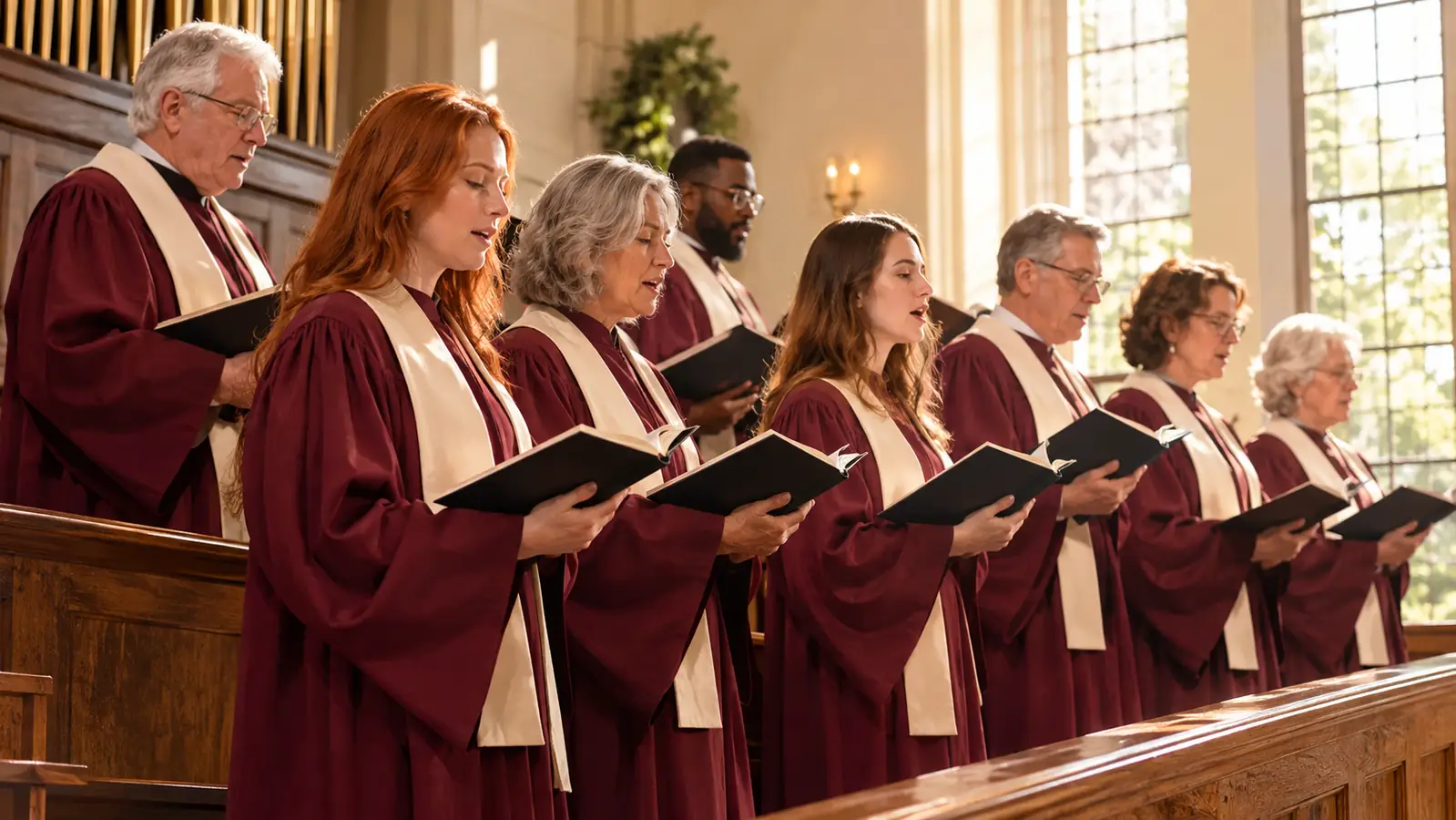
The Sunday our stoles arrived, I made every singer in the loft turn around so I could look at the backs of thirty robes at once. I am the one who keeps the robe closet at Greater Mount Zion, so a crooked stole is my problem before it is anybody else's. What I saw that morning was better than I expected and not perfect. That is roughly where I have landed after a full program year with the CLERKMANS choir stole with crosses.
This is not a review written after one Sunday. Our adult Sanctuary Choir wore these through a whole year of services: ordinary Sunday mornings, Advent, Christmas Eve, two Easter services, a spring concert, and a Florida summer where the sanctuary is warm by the second hymn. I have hung them, pressed them, washed them, and listened to twenty-eight people tell me exactly what they think of them. Here is the honest version, including the parts the listing photos do not show you.
The Quick Verdict
A satin stole that hangs straight, photographs beautifully, and keeps its crosses readable from the last pew. Buy it for a choir that needs one consistent look, then budget a Saturday for pressing and measure your tallest singers before you order.
Amazon Check Today's Price →The stole our whole loft has been wearing for a year
Satin, crosses that read from the back row, and one order that makes thirty volunteers look like one choir. Check the current listing and the size note before you commit.
Amazon Check Today's Price on Amazon →How I've Used It
I did not order these for myself. I ordered them for a volunteer choir that runs from a soprano in her twenties to a tenor who is eighty-one, and my job was to make all of them look like one choir without spending money the committee had not approved. The box came folded flat, so I hung every stole on a wooden hanger in the fellowship hall and let them sit for a week to drop the creases. Then I laid them out on the long table and measured each one end to end before I let anybody take one home.
The first Sunday we wore them was the second Sunday of September, and I got to the fellowship hall at seven in the morning to hand them out. What I learned in twenty minutes is that handing out thirty stoles one at a time is slower than it sounds, especially when two people want the same length and neither wants to be told no. So I laid them in rows on the long table, longest to shortest, and let people pick from the row that matched their height. That took four minutes instead of twenty and ended the argument entirely. I wish I had thought of it in year one instead of year four.
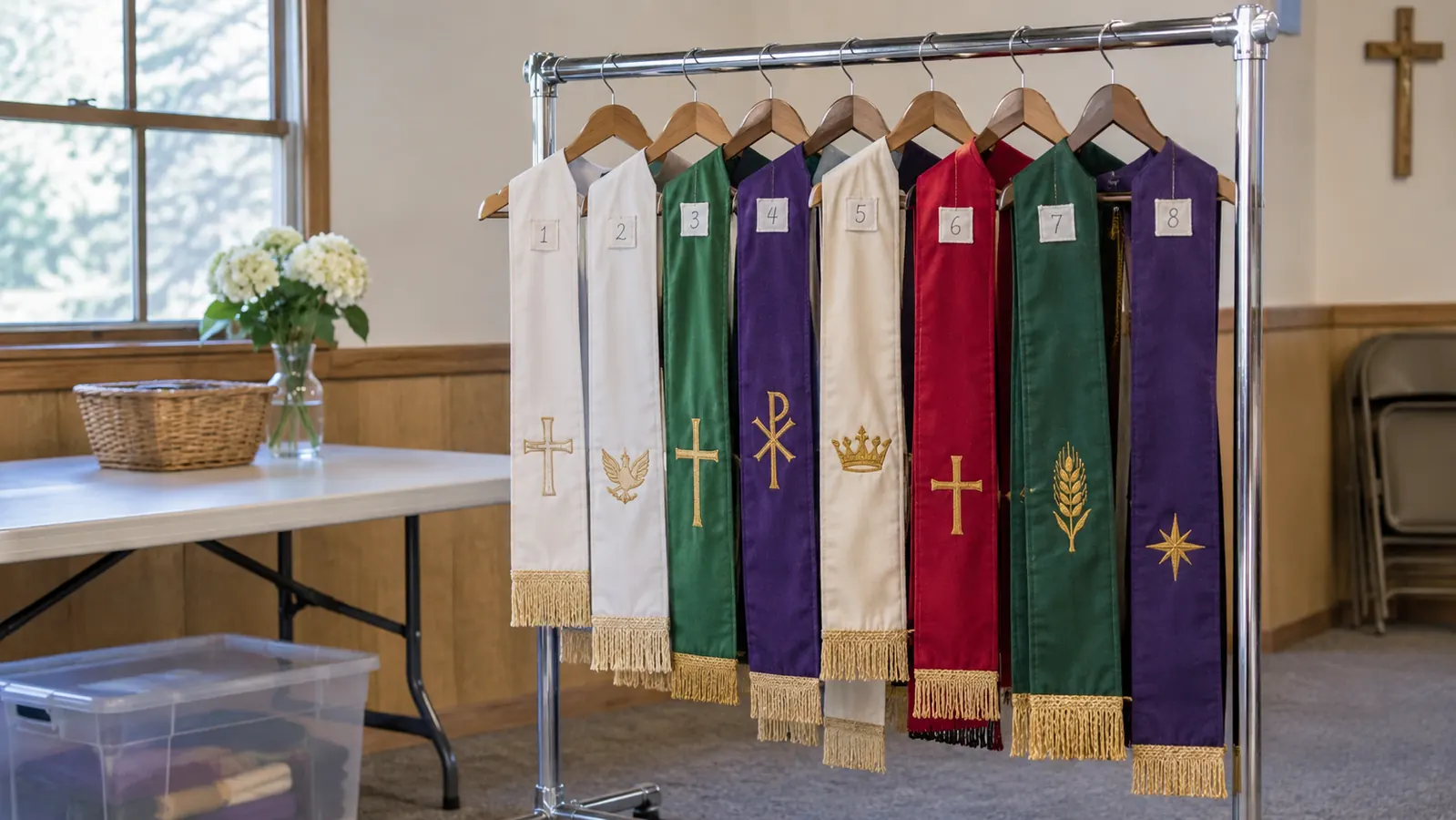
The numbering came later, and my first attempt failed. I taped a list inside the closet door with names and numbers in my own handwriting, and by October the tape had curled in the Florida humidity and half the numbers had rubbed away. What worked was a needle and thread: a small cloth tag sewn inside the back neckline with the singer's number, and the same number in permanent marker on the hanger. I did all thirty in one afternoon with the television on. Nobody has misplaced a stole since, and I no longer count them twice on a Sunday morning.
Wearing one is simple, which I appreciate more every year. It goes over the head and lays down the front of the robe in two even panels. The only thing you can do wrong is put it on crooked. I check collars before processional now the way I used to check hems, and the fix is always the same: straighten the shoulders, pull both panels to the same length, and the whole line looks sharp from the congregation, which is the only angle that actually matters on a Sunday.
The listing calls the size Small, and I will be plain that fit on a piece like this comes down to length more than anything else. On our shorter singers it hung to a good place. On our two tallest men it stopped a little higher than I would have chosen. Nobody complained, but if your choir runs tall, measure a robe front before you order and do not assume.
The product carries a 4.5 star average across a couple hundred reviews, and when I sat down and read through them one evening, the complaints lined up almost exactly with mine. Wrinkles on arrival. Warmth in a hot loft. A few people wishing it were longer. That kind of agreement between a stranger's review and my own year of use tells me more than any star count.
What the Satin Is Like Under Sanctuary Lights
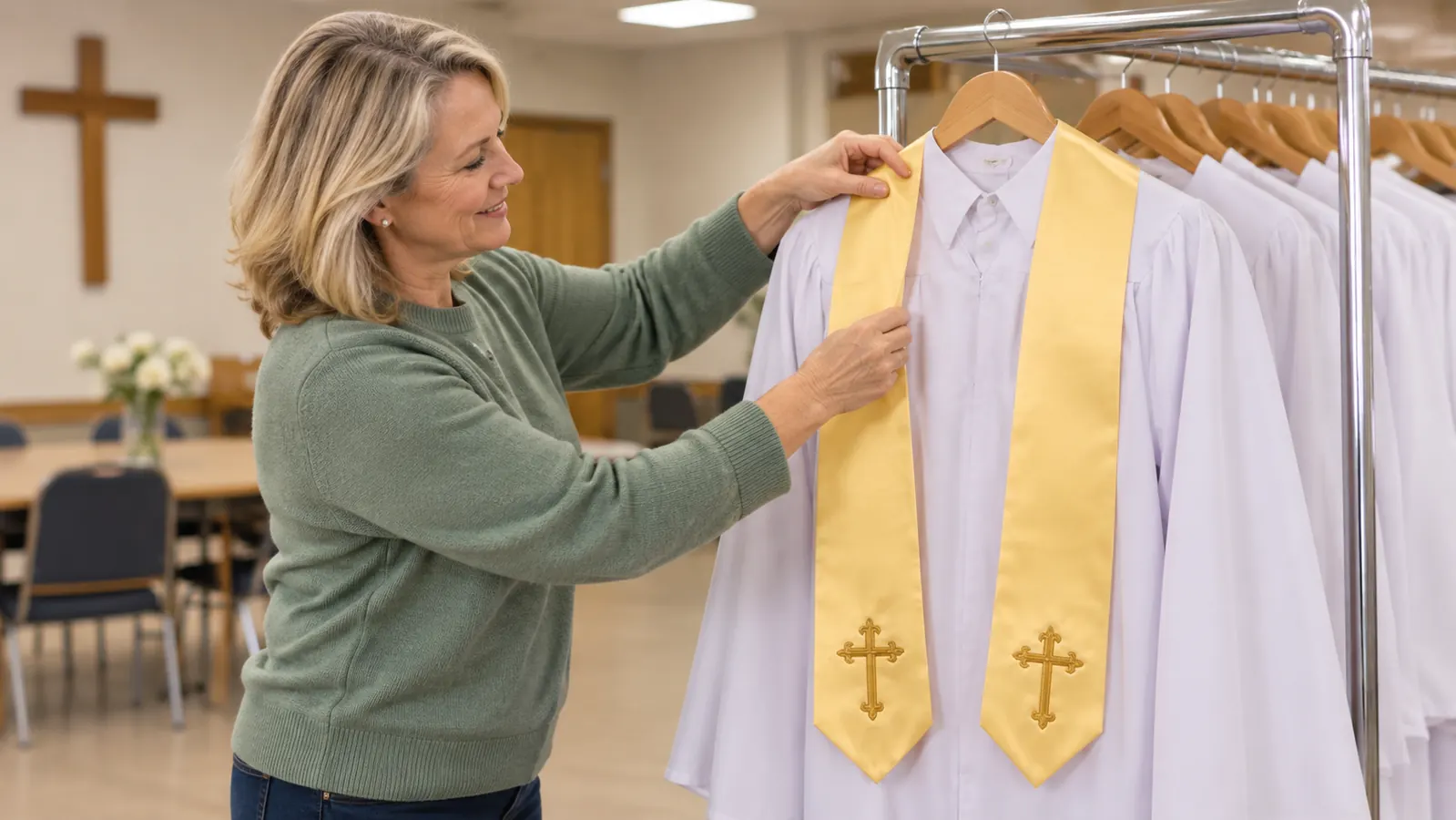
The material is satin, and that is the whole reason this piece photographs the way it does. Satin catches the light in the loft and gives the front of a robe a soft sheen that flat fabric simply does not have. On a Sunday when our service is streamed, that sheen is doing quiet work. The choir looked dressed rather than assembled, and the difference between those two things is most of what a wardrobe volunteer is actually paid in.
I should say what we had before, because it explains why the sheen matters. Three years back the committee bought a set of inexpensive stoles that looked fine in the box and looked flat on the risers. Under our lights they read gray instead of bright, and they photographed as a dull band across the front of the choir. The difference on the streamed service was noticeable enough that two people in the congregation asked whether we had bought new robes. We had not. We had changed the piece on top of them.
What I did not expect was how it behaves in the heat. Our sanctuary in July is not air conditioned to anybody's satisfaction, and satin does not breathe the way cotton does. By the second hymn my altos were fanning themselves with their bulletins, and one of them told me the stole felt like wearing a necktie in August. I have heard that same complaint every summer about every stole we have ever owned, so I do not hold it against CLERKMANS specifically. It is a fair warning, though. If your loft runs hot, know what you are buying.
The satin also does something useful at the shoulders. It drapes with a little weight to it, so the panels fall straight instead of standing out from the body, and that straight fall is what makes a row of thirty people look aligned. A lighter fabric would flap when the choir stands and sits, and in a loft with a ceiling fan turning in July, flapping is a real problem. These stay put through four hymns, a sermon, and a benediction. It is a small thing that adds up.
How the Crosses Read From the Back Row
The crosses are the reason the committee picked this one. Our old stoles were plain, and plain is fine, but a visitor in the back row cannot tell a choir member from a lay reader in a robe. The crosses give the eye something to land on. From the last pew, from the balcony, and from the camera at the back of the nave, they read clearly and evenly, and the size and placement match across the whole batch, which was not true of the cheaper stoles we tried three years ago.
Placement matters more than size, and I measured it. On each stole the crossed emblem sits centered on the chest panel, roughly a hand's width below the neckline, which puts it at the right height for a person of average build and slightly high on our shortest altos. It lands near the eye line of a seated congregation, which is the geometry that actually matters. We once owned a set where the emblem sat low and looked like it was sliding down the front of the robe. Nobody could say why the choir looked sloppy, but everybody could see it.
The pattern is solid, and I want to say a word about that. A solid field with a repeated emblem does its work quietly. It does not compete with the paraments on the pulpit or with the banners behind the choir. We still have one stole from an older set that had a busy pattern on it, and honestly, hanging next to the new ones it looked loud. This one sits down and behaves.
There is also the question of a mixed choir. Our group is unisex, men and women both, and the emblem reads the same on a broad chest as on a narrow one because it is placed on the panel rather than fitted to the body. That sounds obvious and it is not. We once tried a piece with a shaped yoke that looked right on four singers and wrong on everybody else in the row. This one is not shaped. It is the same stole on every person, and that consistency is exactly why it works.
Months of Sundays: How They Held Up
Here is the part I actually care about, and the part I can speak to, because I am the one who does the laundry. After a full year the stoles have kept their shape. No fraying at the ends, no pulled threads at the neck, and the crosses have not faded or cracked. The satin has lost a little of its first-day crispness, but that is normal for the fabric, and I would much rather it soften than crack.
Easter is the real test, because we sing two services and the loft is full and warm and nobody sits down for three hours. This past Easter the stoles went on at seven thirty in the morning and came off a little after noon, and I checked every one of them on the long table afterward. Two had a crease across the back panel from a singer who had been leaning against the rail. Both hung overnight and were fine by the following Sunday. No pulls, no snags from the wooden risers, no marks from the hymnal holders.
I hand wash them in cool water with a gentle detergent, two at a time in the big sink in the fellowship hall, and I hang them to dry over the rod in the back room instead of putting them in the machine. I press them on low with a cloth between the iron and the fabric. That routine is a little fussy, and it is the honest tradeoff of satin. If your choir expects to toss these in with the robes and forget them, plan for two or three to come out looking tired.
My one real complaint is wrinkles. These come out of the bag creased, and they crease again if they ride folded in a bag to a singing engagement. That first year I pressed all thirty in one sitting and it took most of a Saturday, with the radio on and a cup of coffee going cold beside me. Now I keep them on hangers and only press the ones that have traveled. Budget the time once and you are fine. Skip it and you will see it in the photographs.
Then there was the spring concert, the one evening a year our people wear these outdoors. We sang on the church lawn in May under the oaks, and I worried about the satin catching on folding chairs. It did not. What I had not planned for was the damp. Everything in West Palm Beach is humid by eight in the evening in May, and the stoles picked up a softness by the last number that actually helped them drape. I hung them in the back room with the dehumidifier running and they were back to normal within two days.
What I'd Change If We Ordered Again
I would order a couple of inches longer for the back row of tenors, or at least ask the question before I clicked anything. I would also open the boxes a full two weeks earlier than I did, because hanging time does most of the pressing work for free. And I would sew the number tags into the neckline the same afternoon they arrive, since a closet with thirty identical stoles and no numbers is a forty minute argument every single Sunday.
I would not change the piece itself. That is the highest thing I can say about a garment I did not choose for myself. When the committee asks next year whether we should stay with CLERKMANS or look around, my answer will be to stay, with an extra line on the order form for length.
What I Liked
- Crosses read clearly from the back row and on a streamed service
- Satin keeps its sheen and the crosses have not faded in a year of use
- Simple to wear: over the head, two even panels, done
- Consistent size and placement across an order of thirty
- Stores flat or on hangers in a crowded robe closet
Where It Falls Short
- Arrives creased and needs pressing before the first wearing
- Satin runs warm under sanctuary lights in summer
- Not a machine-wash-and-forget piece
- A touch short on very tall singers
Thirty stoles, one order, and not one of them has frayed, cracked, or dropped a cross in a full year of Sundays.
Who This Is For
This is for the choir director or wardrobe volunteer who has to make thirty singers look like one choir by a date certain. It is for the church that has been getting by on mismatched stoles donated over twenty years and wants a consistent look without launching a capital campaign. It also suits a smaller group, eight or ten voices, singing two services and a holiday program, that wants one piece to dress up a plain robe and make the loft look intentional.
Who Should Skip It
Skip it if your loft is miserably hot and your singers already complain about the weight and warmth of their robes, because satin will not fix that. Skip it if nobody on your team has an afternoon to press thirty pieces once a year, and skip it if your choir is mostly tall, because you will want something longer. And if your church already owns a stole everybody likes, keep it. A matching set is worth the fuss, but only if the fuss is something your people will actually do.
One order, one look, thirty singers who match
If your robe closet is a box of mismatched donations, this is the simplest fix I have found in years. Check the current listing, note the size, and open the box early enough to hang the creases out.
Amazon See the CLERKMANS Stole on Amazon →