
The Sunday before Christmas, four minutes before the processional, our soprano section leader came down the fellowship hall stairs holding a stole out in front of her the way you would hold a wet dish towel. Gloria, she said, this one is six inches shorter than mine and the hem is coming apart. She was right on both counts. I had eleven mismatched stoles in that closet and not one of them had been bought on purpose.
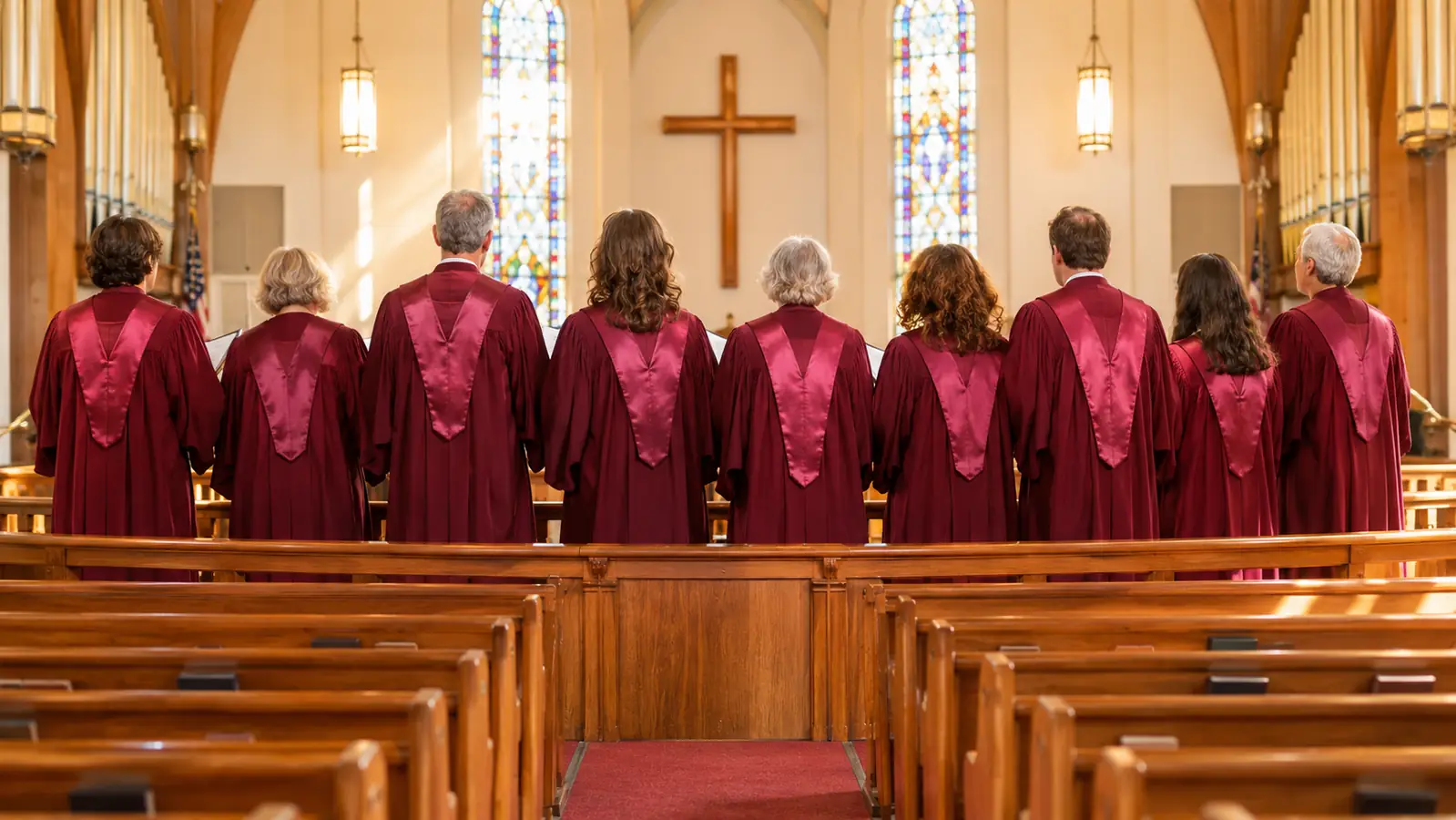
That is how volunteer choir wardrobes happen. Somebody's aunt donates a box. The committee buys four more to fill a gap. Ten years on you have a closet full of stoles in four slightly different versions of the same idea, and on Christmas Eve the whole sanctuary can see that no two of them agree. The congregation looks at the choir for a full eight minutes before the first note.
I have kept the robe closet at Greater Mount Zion for a long time now, and I have learned that the fix is rarely a bigger budget. It is one decision made once. Ours was to stop patching and order a set that matched. We went with the CLERKMANS Choir Stole with Crosses, thirty of them, ordered in one pass so that every voice in the loft would wear the same thing on the same morning.
What sold the robe committee was not a photograph. It was that the CLERKMANS stole is solid satin with the crosses worked into the fabric, and it reads as one clean line from the back of the room. Our sanctuary is long and the loft sits under the lights, so anything small disappears at that distance. A cross that is part of the stole holds up. A pin-on cross does not, and I have swept up enough of them off the risers to know.
We hung them on the Saturday before the fourth Sunday in Advent. Walter carried the box in from the car. I unwrapped all thirty at the folding table and laid them out end to end, which is the only honest way to check whether a set actually matches.
Thirty stoles laid end to end on a folding table will tell you in ten seconds what a photograph cannot: whether they were cut from the same cloth and the same idea.
One order, thirty matching stoles, no committee meeting in January
We stopped patching a closet and bought a set. If your loft is still a box of near-misses, this is the piece that ends the conversation.
Amazon Check Today's Price on Amazon →The first Sunday, I stood at the back during the processional instead of taking my spot in the alto row, which I do not recommend for your nerves. What I wanted to see was whether the stoles would hang differently on a tall soprano than on a short alto. They did what a draped length of satin does. They fall where the shoulder puts them, and once the whole row is wearing the same one, the differences stop being visible. That was the entire point of the exercise.

What the Riser Lights and the Washing Machine Taught Us
Satin is where choir clothing usually goes to die. It will hold a hard crease if it is folded into a drawer and left there, and Florida humidity will find anything stored damp. Our rule now is simple. The stoles travel home with three different people, they get washed cold, and they come back on hangers, never folded into a tote bag. Two Christmas seasons in, the CLERKMANS set still reads as a set.
The question I get asked most is about length. A stole that runs too long will drop below the robe hem and drag on the risers, and one that runs too short looks like it belongs to a smaller choir. Before we ordered, I measured three robes from shoulder to hem and wrote the numbers on an index card that is still taped inside the closet door. Measure first, order once, and you will not spend January explaining to the committee why half a set is going back.
What I did not expect was the Easter feedback. Our spring service runs long, the sanctuary gets warm under the lights, and the choir stands for most of it. A satin stole over a robe is one more layer, and a soprano told me she noticed it less in April than she had in December, which is about as close to a compliment as a wardrobe coordinator gets.
Where this will not suit you: if your church uses a different symbol in its paraments, this is not your piece. If your choir has been wearing hand-embroidered stoles donated by a founding family and they still mean something to the people wearing them, keep them. I am not going to tell you to box up forty years of memory for the sake of a matching row. And if your loft is five voices with a budget already stretched thin by music, spend it on music.
What I'd Tell You If We Were Sitting at My Kitchen Table
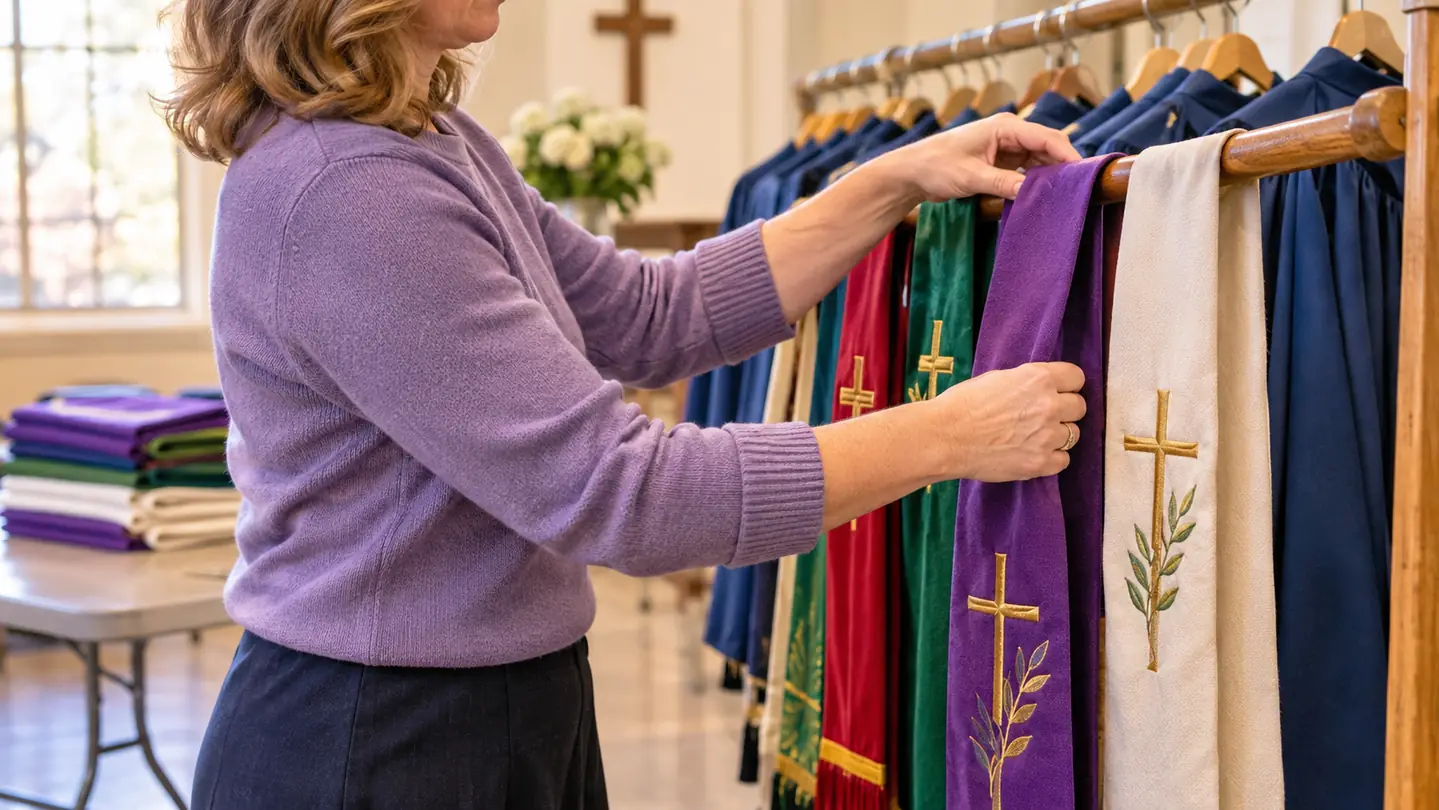
I would tell you to count the closet before you count anything else. Write down how many stoles you actually have, how many are the same length, and how many you would be embarrassed to have a visitor see. Most choirs I have helped discover they need eight or ten fewer than they assumed, because they had been counting two decades of donations as inventory.
Then I would tell you to order them together, in one pass, so the set comes from the same run and the same cloth. Buy a hanger for every one of them and put a strip of tape on the rail with the section names on it, because the two hours you spend doing that in August will save you the argument in December. And I would be honest with you about the last part. Matching stoles will not make your choir sound better. Not one note. What they do is let people stop looking at the clothes and start listening, and on Christmas Eve that is worth a good deal.
The row looks different when all of it matches
Thirty voices, one set, hung on hangers in the fellowship hall by the fourth Sunday of Advent. If that is the year you are having, start here.
Amazon Check Today's Price on Amazon →